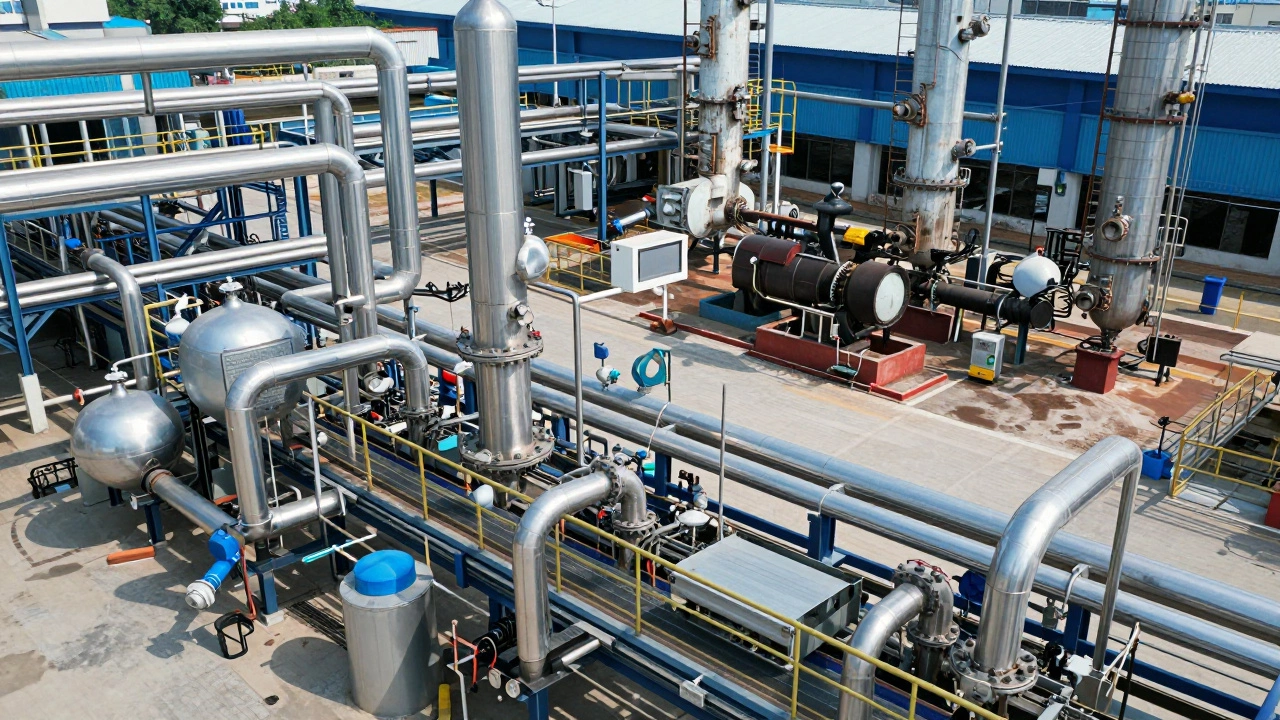
Chemical Compliance Risk Checker
Check if your raw materials fall into high-risk categories based on current Indian environmental regulations and international treaties.
Key Takeaways for Industry Professionals
- Most bans focus on Persistent Organic Pollutants (POPs) and hazardous pesticides.
- The CPCB and Ministry of Environment are the primary enforcement bodies.
- Compliance requires tracking the Stockholm Convention and REACH standards.
- Substituting banned chemicals often leads to better long-term product stability.
When people ask which chemical is banned in India, they aren't usually talking about a single substance. Instead, they are talking about a growing list of banned chemicals in India that span across agriculture, textiles, and heavy manufacturing. The government doesn't just ban things for the sake of it; they usually follow international treaties like the Stockholm Convention, which targets chemicals that stay in the environment for years and travel long distances through air and water.
The Heavy Hitters: Most Common Banned Substances
If you are in the chemical sector, you've likely heard of Polychlorinated Biphenyls (PCBs) is a group of man-made organic chemicals once used in electrical transformers and capacitors due to their insulating properties. These are strictly regulated and largely banned because they don't break down and cause severe toxicity. If you're managing old electrical infrastructure, you might still find these, but producing or importing them is a huge legal risk.
Then there are the pesticides. India has moved aggressively to ban substances like Endosulfan is an organochlorine insecticide that was widely used on cashew and rubber plantations before being banned due to its environmental persistence and toxicity to humans. The fallout from Endosulfan use in Kerala was a wake-up call for the entire country, leading to a total ban on its production and use. If you're in agrochemical manufacturing, switching to bio-pesticides isn't just a trend-it's a survival strategy.
In the textile and leather world, Azo Dyes is a class of organic compounds used in dyes that can release aromatic amines, some of which are known carcinogens. While not every single azo dye is banned, the specific ones that release banned aromatic amines are strictly prohibited. This is especially critical for exporters shipping to the EU, where REACH regulations are even stricter than local Indian laws.
Who Decides What Gets Banned?
The regulatory landscape in India is a web of different agencies. The Central Pollution Control Board (CPCB) is the statutory organization under the Ministry of Environment, Forest and Climate Change that monitors air and water quality and enforces environmental standards. They are the ones who set the limits on what can be discharged into the environment. If the CPCB finds a banned substance in your effluent, your factory's "Consent to Operate" can be revoked in days.
Working alongside them is the Ministry of Environment, Forest and Climate Change (MoEFCC), which handles the high-level policy and signs onto international treaties. When India signs the Minamata Convention, for example, it triggers a nationwide phase-out of mercury-based processes. This means if you're still using mercury in chlor-alkali plants, you're operating on borrowed time.
| Chemical Group | Primary Use | Reason for Ban | Modern Alternative |
|---|---|---|---|
| Organochlorines | Pest Control | Bioaccumulation | Integrated Pest Management (IPM) |
| Certain Azo Dyes | Fabric Coloring | Carcinogenic amines | Low-impact synthetic dyes |
| PCBs | Electrical Insulation | Persistent Toxicity | Mineral oils / Synthetic esters |
| Lead-based pigments | Paints/Coatings | Neurotoxicity | Organic pigments / Titanium dioxide |
The Hidden Danger: Restricted vs. Banned
Here is where most manufacturers get tripped up: the difference between a total ban and a restriction. A total ban means you can't use it, period. A restriction means you can use it, but only under specific conditions or below a certain concentration. For example, Phthalates is esters of phthalic acid used as plasticizers to make plastics more flexible. You'll find these in everything from toys to medical tubing. India has restricted specific phthalates (like DEHP) in children's toys, but they aren't banned across all industrial applications.
If you treat a restricted chemical like a legal one, you might find yourself failing a random audit. The key is to check the Material Safety Data Sheet (MSDS) and compare it with the latest CPCB notifications. Don't rely on what your supplier told you three years ago; regulations change faster than production cycles.
How to Transition to Compliant Chemicals
Switching out a banned chemical isn't as simple as swapping one liquid for another. It can change the viscosity of your product, the drying time of your paint, or the shelf-life of your pesticide. The best way to handle this is through a gradual phase-out. Start by auditing your current inventory and identifying "high-risk" substances. These are chemicals that are already banned in the EU or USA-because if they're banned there, they're usually next on the list for India.
Invest in Green Chemistry is the design of chemical products and processes that reduce or eliminate the use and generation of hazardous substances. Instead of just finding a "less bad" chemical, look for a completely different process. For instance, moving from solvent-based coatings to water-borne systems not only removes banned volatile organic compounds (VOCs) but also lowers your insurance premiums due to reduced fire risk.
The Legal Consequences of Non-Compliance
Ignoring these bans isn't just an ethical lapse; it's a financial gamble. Under the Environment Protection Act (1986), which provides the legal framework for environmental protection in India, the penalties for using banned substances can be severe. We're talking about heavy fines, the immediate sealing of factory premises, and in some cases, criminal charges against the directors of the company.
Beyond the law, there is the market risk. Global brands now demand "Clean Label" certifications. If a major retailer finds a trace of a banned aromatic amine in your textiles, they won't just return the batch; they'll blacklist your entire company. The cost of a quality audit is pennies compared to the cost of losing a multi-million dollar contract.
Where can I find the official list of banned chemicals in India?
There isn't one single "master list" because bans are spread across different acts (like the Insecticides Act) and CPCB notifications. The best approach is to check the official CPCB website and the Ministry of Environment (MoEFCC) notifications regularly. Additionally, checking the Stockholm Convention's list of Persistent Organic Pollutants (POPs) gives you a very accurate preview of what India will likely ban next.
What should I do if I discover banned chemicals in my old inventory?
Do not simply throw them in the trash or pour them down the drain, as this could lead to an even bigger fine for illegal dumping. You must contact a government-authorized hazardous waste management facility. They will provide a manifest for the disposal, which serves as your legal proof that the banned substance was removed from your site correctly.
Are banned chemicals allowed for export purposes?
Generally, if a chemical is banned for production and use within India for health and safety reasons, you cannot manufacture it even for export. However, some specific exemptions exist for chemicals that are strictly used as intermediates in a closed-loop system. You must obtain specific permissions from the MoEFCC for these cases.
How do I know if a replacement chemical is safe?
Always request a comprehensive Material Safety Data Sheet (MSDS) and a Certificate of Analysis (CoA) from the supplier. Look for chemicals that have a "green" rating on global databases like the EPA's Safer Choice or similar eco-labels. Conduct a small-scale pilot test to ensure the replacement doesn't introduce new instabilities into your product.
Do these bans apply to small-scale industries (SSI) as well?
Yes, environmental laws apply to all scales of operation. While small-scale industries sometimes fly under the radar longer, the penalties are just as harsh. In fact, SSIs are often more vulnerable because they lack the budget for expensive compliance audits, making it even more important to stay informed.
Next Steps for Your Business
If you're feeling overwhelmed, start with a simple chemical audit. List every substance entering your facility and cross-reference it with the current CPCB guidelines. If you find a red flag, don't panic-start looking for alternatives immediately. The companies that thrive in the next decade won't be the ones that fought the regulations, but the ones that used them as a reason to innovate and modernize their chemistry.