India Electronics Growth Estimator
Explore how policy incentives like the Production Linked Incentive (PLI) and global supply chain shifts are driving growth in mobile phones, semiconductors, and EVs.
Investment Parameters
You might think the answer is artificial intelligence or maybe fintech apps. But if you look at the hard numbers coming out of Indian factories right now, there is a different winner. The electronics manufacturing sector in India is exploding. It is not just growing; it is transforming from an import-heavy market into a global export hub. This shift is driven by government policy, massive private investment, and a changing global supply chain landscape.
Why does this matter to you? Whether you are an investor looking for the next big opportunity, a student choosing a career path, or a business owner wanting to pivot, understanding where the growth is happening gives you a head start. The data shows that while software services have long been India's calling card, hardware manufacturing is finally catching up. Let’s break down exactly why this sector is leading the pack and what specific technologies within it are driving the surge.
The Data Behind the Boom
Let’s look at the facts. According to recent reports from the Ministry of Electronics and Information Technology (MeitY), India’s electronics production has grown significantly over the last five years. In fiscal year 2023-24 alone, mobile phone exports crossed $15 billion, a staggering increase from just a few billion dollars a decade ago. This isn't accidental. It is the result of deliberate strategic moves.
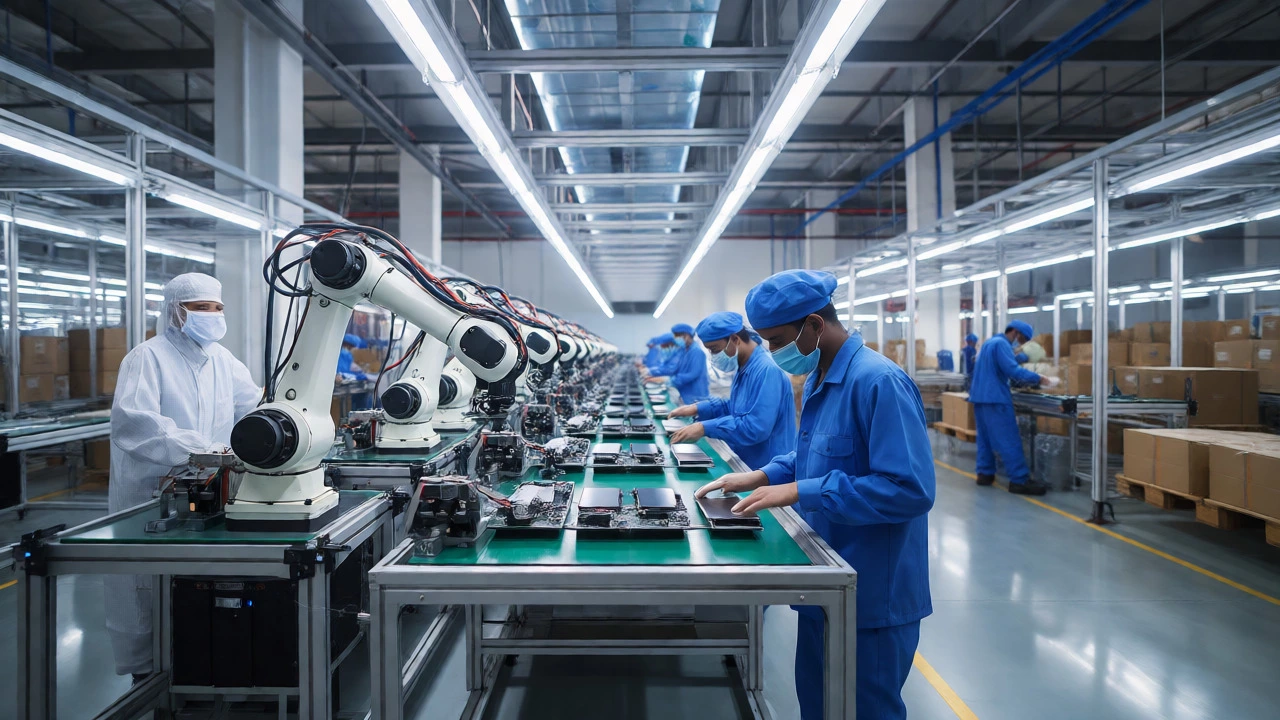
The Production Linked Incentive (PLI) scheme is a government initiative that provides financial incentives to companies based on their incremental sales of products manufactured in India. For electronics, this has been a game-changer. Companies like Apple, Samsung, and Foxconn have ramped up local assembly lines because the math finally works. When you combine tax breaks with improved infrastructure, the cost advantage shifts back to India.
But it is not just about assembling phones. The ecosystem is deepening. We are seeing growth in printed circuit board (PCB) manufacturing, display modules, and battery packs. These are the building blocks. Without them, you cannot have a true manufacturing industry. You only have assembly shops. India is moving past the assembly stage.
Semiconductors: The Next Frontier
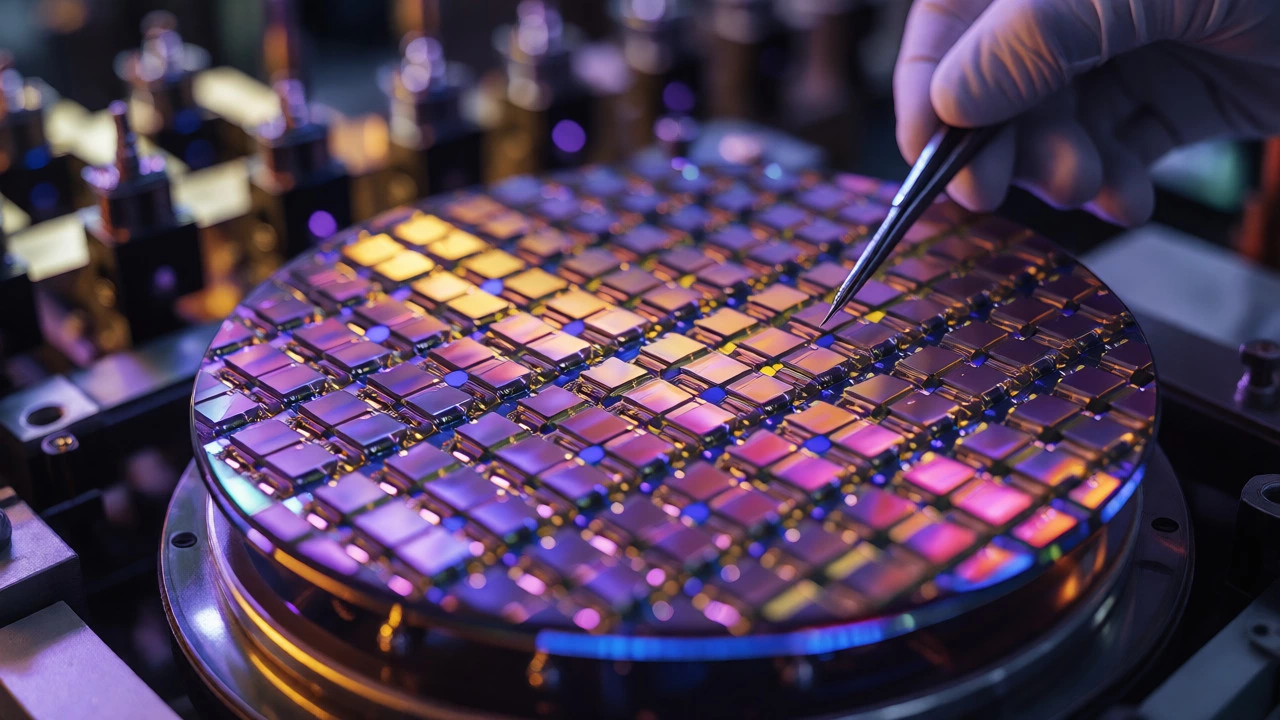
If electronics manufacturing is the current engine, semiconductors are the fuel. And right now, India is building its own gas stations. The India Semiconductor Mission is a program aimed at establishing a comprehensive framework to support the development of the semiconductor and display manufacturing ecosystem in India. With approved projects worth over $10 billion, including fabs in Gujarat and Tamil Nadu, the country is entering the most complex part of the tech value chain.
Why is this critical? Because chips are everywhere. From your smartphone to your electric vehicle, from smart meters to defense systems. Currently, India imports nearly all its chips. That is a vulnerability. By building local capacity, even if it starts with packaging and testing facilities first, we reduce dependency on foreign suppliers. This de-risking strategy attracts global players who want alternative hubs outside of China and Taiwan.
| Driver | Impact Level | Key Players Involved |
|---|---|---|
| PLI Scheme | High | Apple, Dixon Technologies, Kaynes Technology |
| Semiconductor Fabs | Medium (Long-term High) | Tata Electronics, Micron, CG Power |
| Digital Infrastructure | High | Jio, Airtel, Government of India |
| EV Adoption | Rising | Tata Motors, Ola Electric, Battery Manufacturers |
Mobile Phones: The Gateway Drug
It is impossible to talk about fast-growing tech without mentioning smartphones. India is the second-largest smartphone market in the world. But here is the twist: we are no longer just buying imported phones. We are making them. Over 98% of the phones sold in India are now made domestically. This statistic alone tells you everything about the speed of this transition.
Companies like Dixon Technologies is an Indian electronics manufacturing services company that provides end-to-end solutions for various electronic products have seen their stock prices multiply as they take on more contracts for global brands. They make everything from LED TVs to washing machines to smartphones. This diversification reduces risk and creates a robust industrial base. When one segment slows down, another picks up the slack.
For consumers, this means faster access to new models. For workers, it means millions of jobs in factory floors across Noida, Chennai, and Hyderabad. The ripple effect supports logistics, retail, and repair services. It is a whole economy springing up around these devices.
Electric Vehicles and Battery Tech
Another area experiencing hyper-growth is electric vehicles (EVs). While EVs are often categorized under automobiles, their heart is electronic. Batteries, control units, charging infrastructure-these are all electronics. The demand for lithium-ion batteries is skyrocketing. India currently lacks large-scale battery cell manufacturing, but that is changing.
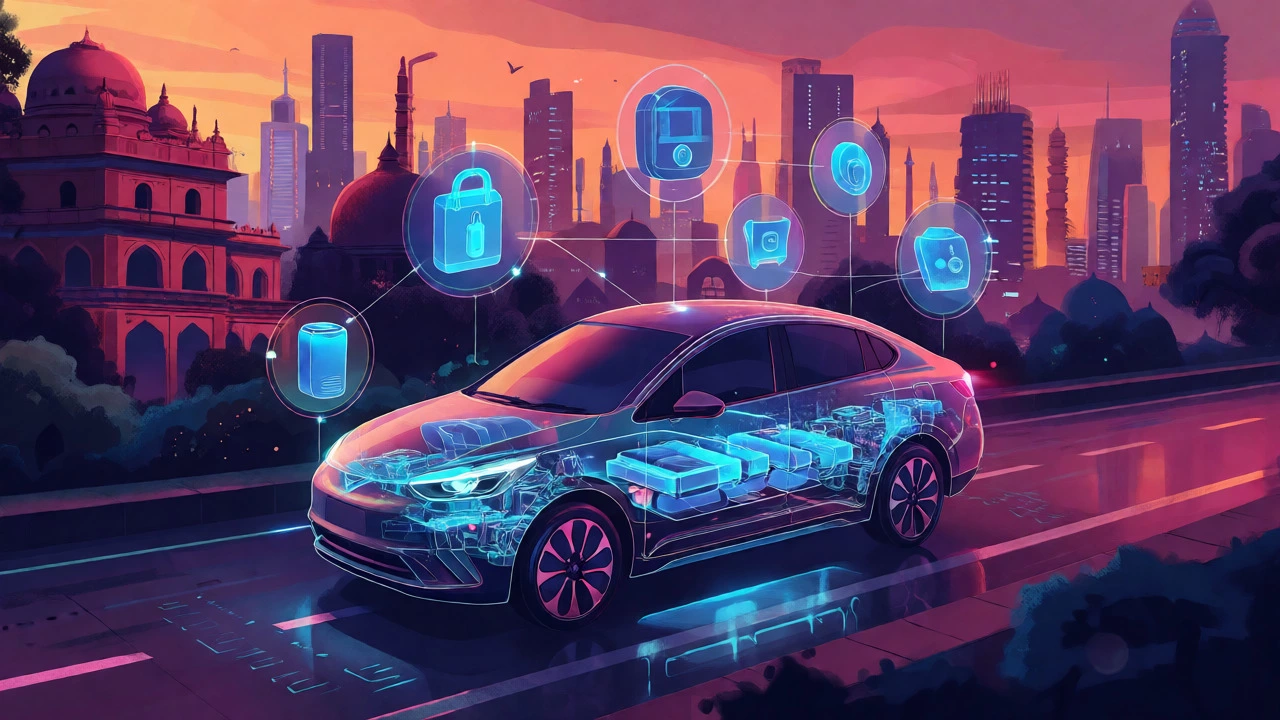
Lithium-ion batteries are rechargeable batteries that use lithium ions moving from the negative electrode to the positive during discharge are the key component. New plants are being set up to produce cells locally. This ties directly back to the semiconductor story. Smart BMS (Battery Management Systems) require microcontrollers and sensors. So, when you buy an EV, you are effectively buying a computer on wheels. The tech stack overlaps completely.
Startups are also jumping in. Companies focusing on battery recycling and second-life applications are gaining traction. As the first generation of EVs reaches end-of-life, managing waste becomes a business opportunity. This circular economy approach adds another layer of growth potential.
IoT and Smart Devices
Have you noticed how many "smart" devices are popping up? Smart locks, air purifiers, security cameras, and health monitors. This is the Internet of Things (IoT). In India, IoT adoption is accelerating due to cheaper connectivity and affordable sensors. The average price of a smart home device has dropped dramatically, making it accessible to the middle class.
Manufacturers are responding by producing localized versions of these gadgets. Instead of importing finished goods, Indian firms are designing and assembling them here. This allows for customization based on local needs, such as power fluctuations or humidity levels. For example, air conditioners with IoT features can be controlled via apps, optimizing energy usage during peak hours. This convenience drives sales, which drives manufacturing volume.
Career Opportunities in This Sector
If you are wondering what this means for your job prospects, the outlook is bright. There is a talent gap in hardware engineering. Software developers are abundant, but embedded systems engineers, PCB designers, and semiconductor technicians are in short supply. Universities are updating curricula, but industry training programs are filling the immediate void.
Roles like VLSI design engineer, test engineer, and supply chain manager are seeing increased salaries. If you have a background in electrical engineering or physics, pivoting toward electronics manufacturing could offer higher stability than some saturated IT service roles. The physical nature of this work makes it less susceptible to automation in the near term compared to routine coding tasks.
Challenges to Watch
It is not all smooth sailing. Supply chain disruptions remain a risk. Most raw materials still come from abroad. Geopolitical tensions can spike costs overnight. Also, skill gaps persist. Factories need trained operators, not just engineers. Vocational training centers are scaling up, but quality varies.
Environmental concerns are also rising. E-waste management needs stricter enforcement. As production goes up, so does waste. Sustainable practices will become mandatory, not optional. Companies investing in green manufacturing processes will likely win future tenders and consumer loyalty.
Final Thoughts
The fastest-growing technology in India isn't a single app or algorithm. It is the tangible hardware behind our digital lives. Electronics manufacturing is the backbone supporting AI, IoT, EVs, and telecommunications. The momentum is real, backed by billions in investment and clear policy direction. If you want to be part of India's next economic wave, keep your eyes on the factories making the chips, phones, and batteries.
What is the primary driver of electronics growth in India?
The primary drivers are the Production Linked Incentive (PLI) scheme, which subsidizes local manufacturing, and the global shift towards 'China Plus One' strategies, encouraging companies to diversify their supply chains to India.
Is India capable of manufacturing semiconductors?
Yes, through the India Semiconductor Mission. Initial phases focus on packaging, assembly, and testing (OSAT), with full-fledged fabrication plants (fabs) recently approved for locations in Gujarat and Tamil Nadu.
Which city is the biggest hub for electronics manufacturing?
Noida and Greater Noida in Uttar Pradesh are major hubs for mobile phone assembly. Chennai in Tamil Nadu is emerging as a key center for semiconductors and automotive electronics.
How does the PLI scheme benefit consumers?
By incentivizing local production, the scheme reduces import duties and logistics costs, potentially lowering prices for consumers. It also ensures faster availability of new products since they don't need to be shipped from overseas.
What skills are needed for jobs in this sector?
Key skills include embedded systems programming, PCB design, VLSI knowledge, quality control certification, and supply chain management expertise. Vocational training for machine operation is also highly valued.