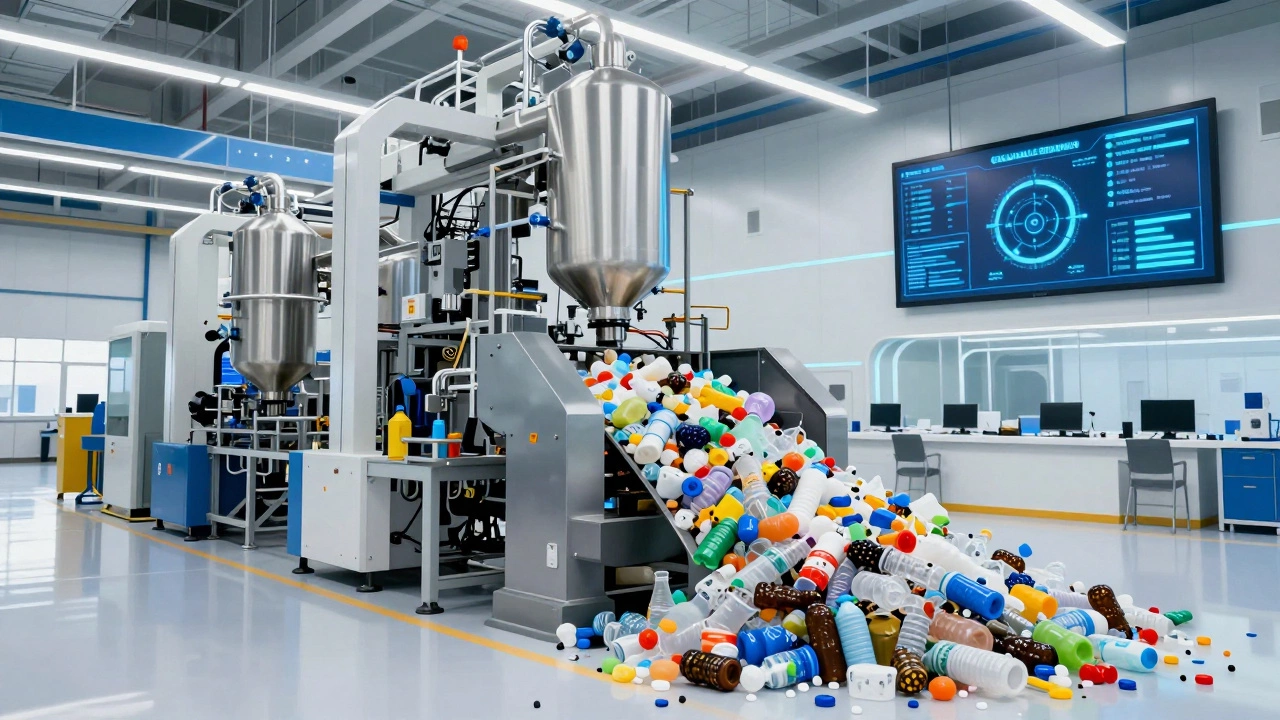
Plastic Manufacturing Readiness Simulator
Select your current operational status across key areas to see where your business stands on the timeline.
2026
Immediate Shift Phase
Analyzing gaps...
Select your options on the left to visualize your company's position on the plastic production timeline.
Imagine a world where the single-use water bottle you grabbed this morning doesn't sit in a landfill for another 450 years. It sounds like science fiction, but it is becoming the new operational reality for plastic manufacturing companies are industrial entities that produce polymer-based goods through processes like injection molding and extrusion. The question isn't just "when will plastic disappear?" because it won't. The real question is: when will the *current model* of plastic production vanish?
If you are running a factory or planning to enter this sector, the clock is ticking. Governments, investors, and consumers are pushing for a shift away from linear consumption (make, use, dispose) toward a circular system. This transition isn't happening overnight, but the deadlines are getting tighter every year. Here is the realistic timeline for what comes next.
The Immediate Shift: 2026-2030
We are already in the thick of it. By 2030, the landscape of plastic production will look drastically different than it did in 2020. The primary driver here is regulation. The European Union’s Single-Use Plastics Directive has already banned items like cutlery, plates, and straws made of conventional plastics. Other regions, including parts of Asia and North America, are following suit with similar bans on hard-to-recycle packaging.
For manufacturers, this means two things:
- Material Substitution: You cannot rely solely on virgin polyethylene terephthalate (PET) or polystyrene. There is a massive push toward bio-based polymers like polylactic acid (PLA) derived from corn starch or sugarcane. These materials offer a lower carbon footprint and are often compostable under industrial conditions.
- Recycled Content Mandates: Many jurisdictions now require a minimum percentage of recycled content in new products. For example, some states in the US mandate that beverage bottles contain at least 25% post-consumer recycled (PCR) material by 2030. This forces manufacturers to invest in advanced sorting and cleaning technologies to ensure PCR meets quality standards.
The goal for this period is not elimination, but reduction and substitution. Companies that fail to adapt their supply chains now will find themselves unable to sell to major retailers who have committed to net-zero goals.
The Transition Phase: 2031-2040
By the early 2030s, the focus shifts from simple substitution to systemic change. This is where the concept of the circular economy becomes an economic system aimed at eliminating waste and the continual use of resources through sharing, leasing, reusing, repairing, refurbishing, and recycling. takes center stage. Traditional mechanical recycling has limits; plastics degrade in quality each time they are melted down. To solve this, chemical recycling technologies are expected to scale up significantly.
Chemical recycling breaks plastics down into their basic molecular building blocks (monomers), allowing them to be rebuilt into virgin-quality plastic. This process can handle mixed and contaminated plastics that mechanical recyclers reject. While currently expensive and energy-intensive, advancements in catalysis and AI-driven sorting are driving costs down.
During this decade, we expect to see:
- Extended Producer Responsibility (EPR) Laws: More countries will implement strict EPR schemes, making manufacturers financially responsible for the entire lifecycle of their products, including collection and recycling. This changes the business model from selling volume to selling durability and recoverability.
- Design for Disassembly: Products will be designed with recycling in mind. Multi-layer packaging, which is notoriously difficult to recycle, will be replaced by mono-material structures that can be easily processed.
- Rise of Alternative Materials: Beyond bioplastics, materials like mycelium (mushroom roots), algae-based films, and even air-derived plastics (using captured CO2) will move from niche experiments to commercial viability.
The "gone" part of your question starts to make sense here. Conventional, non-recyclable plastic packaging begins to disappear from mainstream markets, replaced by reusable systems or fully circular alternatives.
The Long-Term Vision: 2041-2050 and Beyond
By mid-century, the term "plastic waste" as we know it today could become obsolete. This isn't about banning all polymers-plastics are essential in healthcare, electronics, and aerospace due to their lightweight and durable properties. Instead, it’s about closing the loop completely.
In this future scenario:
- Zero Virgin Feedstock: New plastic products are made almost entirely from recycled or bio-based sources. Fossil fuel extraction for plastic production drops sharply.
- Smart Infrastructure: IoT-enabled bins and automated sorting facilities ensure that nearly 90%+ of plastic waste is captured and fed back into the production cycle.
- Global Standardization: A unified global treaty on plastic pollution, likely finalized in the late 2020s, creates consistent regulations worldwide, preventing leakage of waste to less regulated regions.
This timeline assumes continued technological innovation and political will. If progress stalls, the crisis worsens. But the momentum is undeniable. The cost of inaction-environmental damage, health impacts, and regulatory penalties-is far higher than the cost of transformation.
| Feature | Current Model (Pre-2026) | Transition Model (2030s) | Circular Model (2050+) |
|---|---|---|---|
| Primary Raw Material | Virgin fossil fuels | Mix of virgin, PCR, and bio-based | Recycled feedstock and bio-sources |
| Waste Management | Landfill and incineration dominant | Increased mechanical and chemical recycling | Near-zero waste; closed-loop systems |
| Product Design | Cost-driven, often multi-material | Designed for recyclability | Designed for disassembly and reuse |
| Regulatory Pressure | Fragmented, voluntary initiatives | Mandatory EPR and recycling targets | Global standardized treaties |
What Does This Mean for Your Business?
If you own or manage a plastic manufacturing business, waiting for the last minute is a risky strategy. The market is rewarding early adopters. Brands like Unilever and Coca-Cola are publicly committing to 100% recyclable, reusable, or compostable packaging by 2025-2030. They need suppliers who can deliver these solutions.
Here are actionable steps you can take right now:
- Audit Your Materials: Identify which products use hard-to-recycle plastics. Prioritize switching these to mono-materials or certified compostable alternatives.
- Invest in R&D: Partner with universities or tech startups specializing in chemical recycling or bio-polymers. Early access to proprietary technology can give you a competitive edge.
- Engage with Policy Makers: Stay informed about local and international regulations. Join industry associations to help shape sensible policies rather than reacting to them after they’re passed.
- Communicate Value: Educate your clients on the long-term benefits of sustainable materials. Highlight reduced environmental impact and compliance readiness.
The era of cheap, disposable plastic is ending. The future belongs to those who innovate within the constraints of sustainability. It’s not about when plastic disappears-it’s about how quickly we can transform its role in our economy.
Will all plastic be banned by 2050?
No, not all plastic will be banned. Plastics are critical in medical devices, automotive components, and electronics due to their unique properties. However, single-use plastics and non-recyclable packaging are expected to be largely phased out or replaced with circular alternatives by 2050.
What is chemical recycling, and why is it important?
Chemical recycling breaks down plastic waste into its basic molecular components (monomers), which can then be used to create new, high-quality plastic. Unlike mechanical recycling, which degrades plastic quality over time, chemical recycling allows for infinite loops of recycling, making it crucial for a true circular economy.
How can small plastic manufacturers afford to switch to sustainable materials?
Small manufacturers can start by focusing on design-for-recycling, using existing mono-materials instead of multi-layer composites. Collaborating with other businesses to share recycling infrastructure or investing in incremental upgrades to equipment can also reduce costs. Government grants and green financing options are increasingly available to support this transition.
Are bioplastics a complete solution to plastic pollution?
Bioplastics are part of the solution but not a silver bullet. Some bioplastics still require industrial composting facilities to break down properly and can contaminate traditional recycling streams if not sorted correctly. They are best suited for specific applications like food packaging, where contamination is high, and should be used alongside improved recycling systems.
What is Extended Producer Responsibility (EPR)?
Extended Producer Responsibility (EPR) is a policy approach where manufacturers are held physically and financially responsible for the entire lifecycle of their products, including take-back, recycling, and final disposal. This incentivizes companies to design products that are easier to recycle and less harmful to the environment.