Food Processing Unit Operations Simulator
1. Mechanical Ops
Washing, sorting, crushing
2. Fluid Flow
Pumping mash to press
3. Mass Transfer
Separation & filtration
4. Heat Transfer
Pasteurization
5. Evaporation
Concentration for shipping
6. Storage/Packaging
Final product handling
Current Operation Details
Select a step above to begin
Click on any operation card to learn about its specific role in apple juice production.
Ever wondered why your morning coffee tastes smooth, why sliced apples don’t turn brown immediately, or how milk stays safe to drink for weeks? It’s not magic. It’s engineering. Specifically, it’s the application of six fundamental unit operations that form the backbone of almost every food manufacturing process on the planet.
If you are stepping into the world of food technology, plant management, or even just curious about what happens behind those stainless steel walls, understanding these operations is non-negotiable. They are the building blocks. Whether you are making chocolate bars or canned beans, you are combining these same basic physical and chemical transformations.
In this guide, we break down the six core unit operations defined by food engineers. We will look at what they are, why they matter, and how they interact to create the safe, tasty food you buy today.
1. Mechanical Operations: Moving and Shaping Matter
Before any cooking or preserving happens, raw materials need to be handled. This is where mechanical operations come in. Think of this as the "prep work" phase, but on an industrial scale.
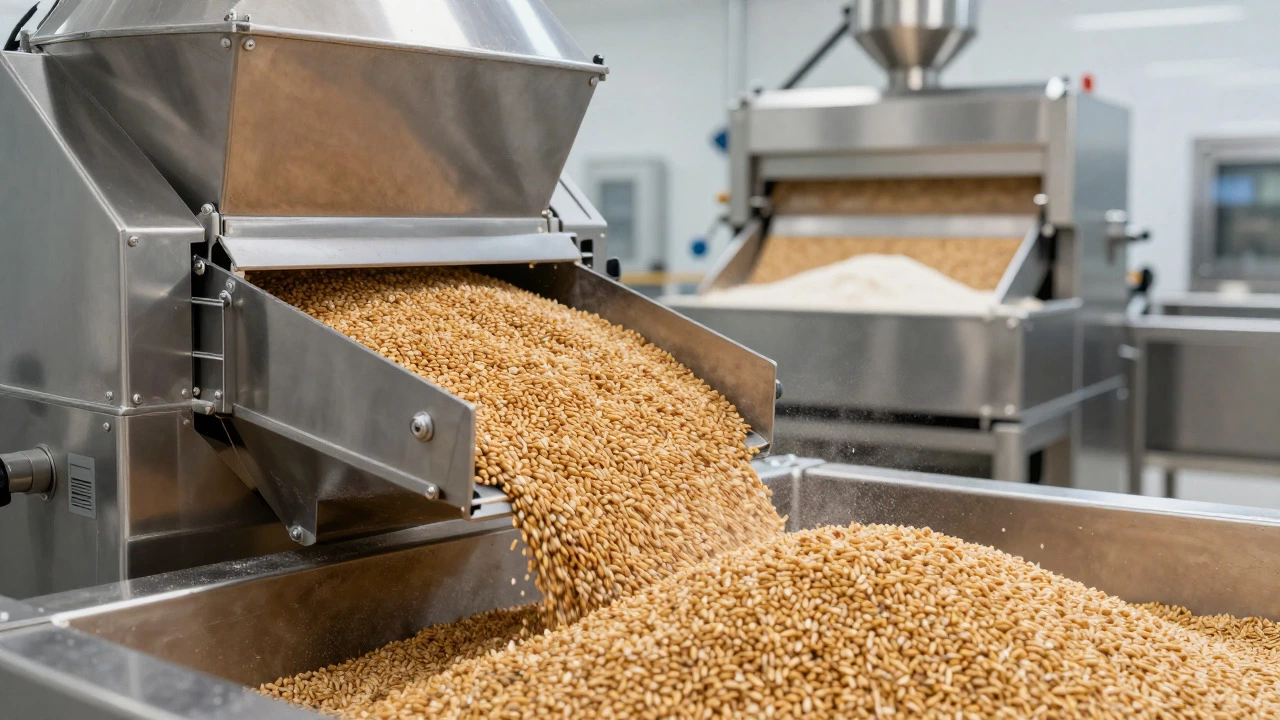
Mechanical operations involve the movement, size reduction, and separation of solid particles. When a factory receives wheat, it isn't ready for bread yet. It needs cleaning, grinding, and sifting. These are all mechanical tasks.
| Operation | Purpose | Real-World Example |
|---|---|---|
| Size Reduction | Breaking large pieces into smaller ones to increase surface area. | Grinding coffee beans, milling flour, chopping vegetables. |
| Transportation | Moving materials from one stage to another. | Conveyor belts moving tomatoes into a canning line; pneumatic tubes for powder. |
| Solid Separation | Removing unwanted solids or separating solids by size. | Sieving rice to remove stones; centrifuges separating cream from milk (though this overlaps with fluid mechanics). |
Why does size reduction matter so much? It’s about efficiency. Smaller particles cook faster, extract flavors more effectively, and mix more uniformly. If you grind spices too coarsely, you lose flavor potency. If you mill flour too finely, you might affect the texture of the final bread. Getting the particle size distribution right is a critical engineering challenge.
2. Fluid Flow Operations: The Movement of Liquids and Gases
Food isn't just solids. Milk, juice, oil, and sauces are fluids. Managing how these liquids move through pipes, pumps, and tanks is the second pillar of food processing.
Fluid flow operations deal with the transport of liquids and gases. This includes pumping milk from storage tanks to pasteurizers, spraying water onto crops during washing, or using air currents to dry fruits. The key concept here is viscosity-how thick or thin a fluid is. Honey flows differently than water, and tomato puree behaves differently than both.
Engineers must calculate pressure drops, pipe diameters, and pump power requirements to ensure that viscous sauces don't clog pipes while delicate juices aren't sheared apart by aggressive pumps. For example, if you pump orange juice too violently, you can break the pulp structure, leading to sedimentation and a poor mouthfeel. Gentle handling via carefully designed fluid dynamics preserves quality.
3. Heat Transfer Operations: Cooking, Cooling, and Sterilizing
This is perhaps the most recognized category. Heat transfer involves adding or removing heat from food products. It serves three main purposes: preservation, safety, and sensory improvement.
When you pasteurize milk, you are using heat transfer to kill pathogens without boiling the product. When you freeze ice cream, you are removing heat rapidly to prevent large ice crystals from forming. Both are heat transfer processes, just in opposite directions.
- Heating: Pasteurization, sterilization (canning), baking, frying, and blanching.
- Cooling: Refrigeration, freezing, and chilling after hot filling.
- Evaporation: Concentrating juices by boiling off water (which requires intense heat input).
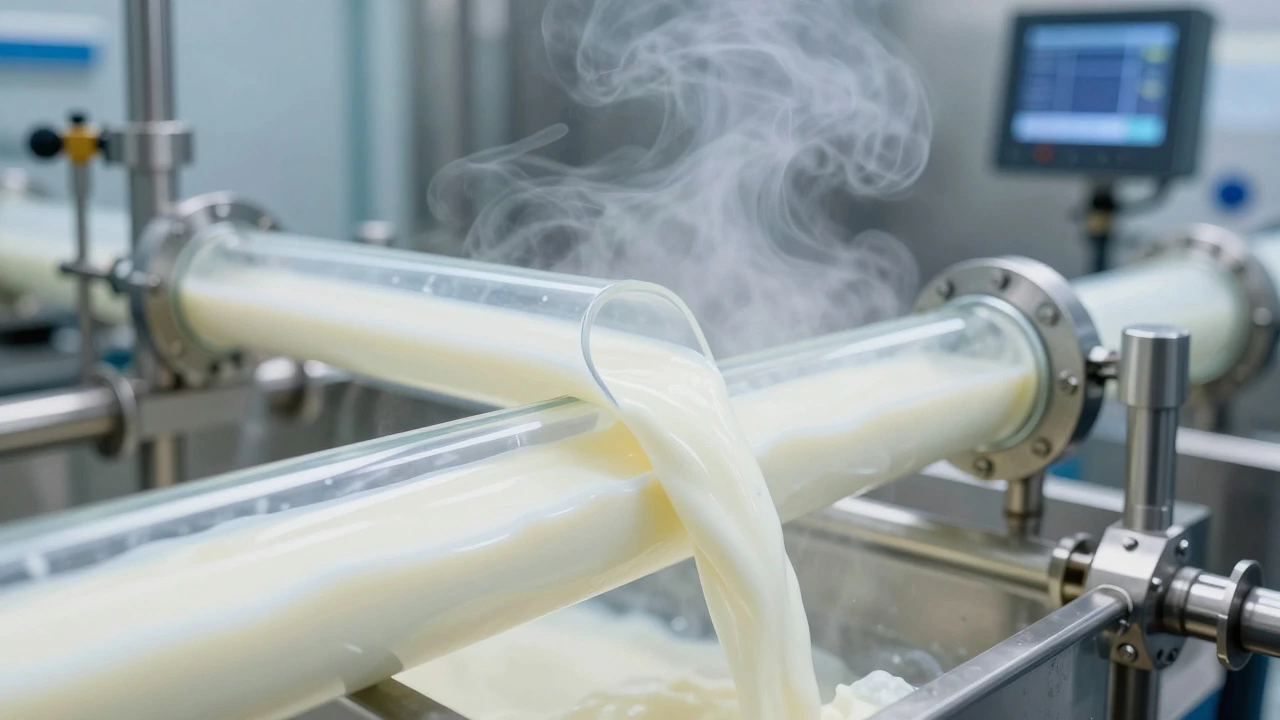
The science here revolves around conduction, convection, and radiation. In a continuous flow pasteurizer, milk flows through a heated plate system (conduction/convection). In a microwave oven, energy penetrates the food directly (dielectric heating). Understanding heat transfer coefficients helps engineers design equipment that cooks food evenly without burning the outside while the inside remains raw.
4. Mass Transfer Operations: Mixing and Extracting
If heat transfer is about temperature, mass transfer is about composition. It involves the movement of components within a mixture. This is crucial for extraction, absorption, distillation, and mixing.
Consider making tea. You pour hot water over leaves. The flavor compounds move from the solid leaf into the liquid water. That is mass transfer. In industry, this looks like extracting oil from soybeans using hexane, or decaffeinating coffee using supercritical carbon dioxide.
Mass transfer also governs drying. When you dry fruit, water moves from the inside of the fruit to the surface, then evaporates into the air. The rate at which this happens depends on humidity, temperature, and airflow. Another common example is fermentation, where sugars are converted into alcohol and CO2, involving complex mass transfer between yeast cells and the liquid medium.
Without efficient mass transfer, your salad dressing would separate instantly, your beer wouldn't ferment properly, and your essential oils would remain trapped in the plant material.
5. Drying and Dehydration: Removing Water for Preservation
While drying involves heat and mass transfer, it is often categorized separately because it is so distinct and vital in food preservation. Water activity ($a_w$) is the enemy of shelf life. By removing water, we inhibit microbial growth and enzymatic reactions.
Drying methods vary wildly based on the product:
- Hot Air Drying: Used for grains, herbs, and some fruits. Simple but can degrade nutrients if temperatures are too high.
- Freeze Drying (Lyophilization): Water is frozen and then sublimed (turned directly to vapor) under vacuum. This preserves structure and nutrients perfectly but is expensive. Think astronaut food or instant coffee.
- Spray Drying: Liquid feed (like milk) is sprayed into hot air, creating fine powder droplets instantly. Used for milk powder, egg powder, and instant soup bases.
The goal is always to reach a target moisture content that ensures stability without damaging the food's rehydration properties. If you dry pasta too aggressively, it cracks. If you don't dry it enough, mold grows. Finding that sweet spot is the engineer's job.
6. Chemical and Biochemical Operations: Transforming Ingredients
The final category covers changes in the chemical composition of the food. While many unit operations are purely physical (moving, heating, drying), this step alters the molecular structure.
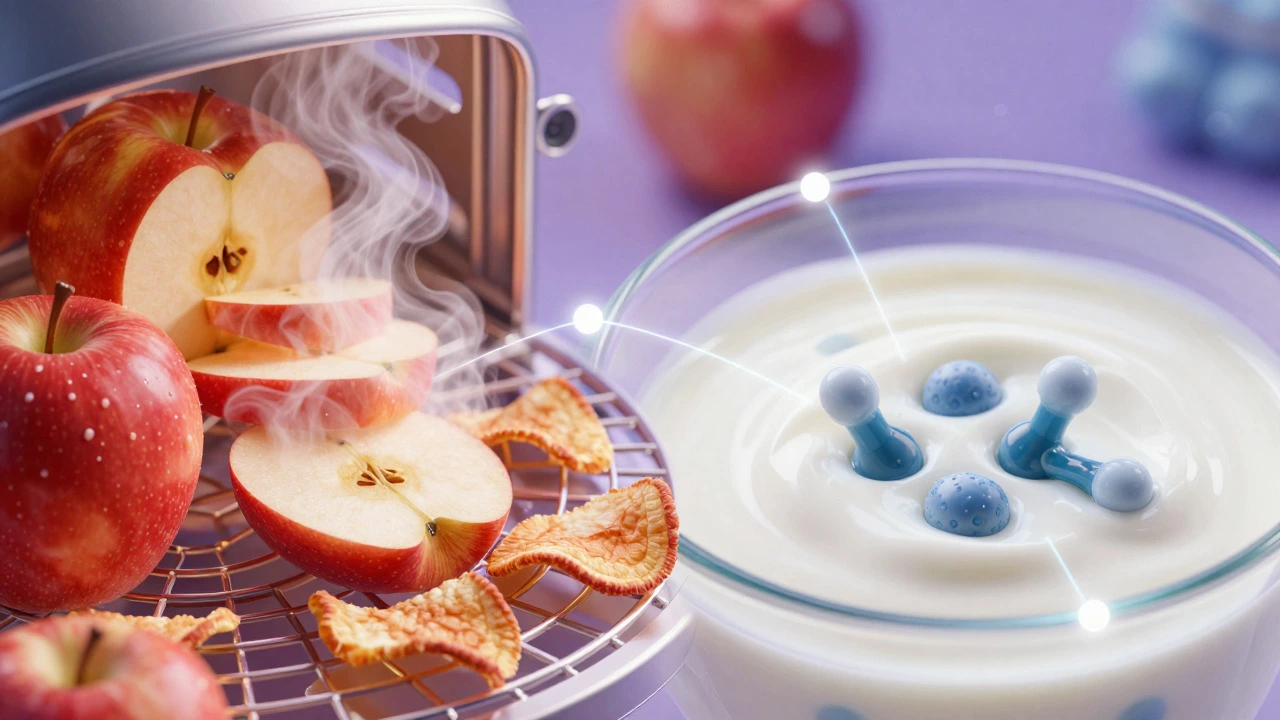
This includes fermentation (yeast converting sugar to ethanol), enzymatic hydrolysis (breaking down proteins with enzymes to make cheese or tenderize meat), and oxidation/reduction reactions (browning of cut apples, though often prevented). It also covers fortification, where vitamins and minerals are added back into refined products.
For instance, in yogurt production, bacterial cultures convert lactose into lactic acid. This biochemical change lowers the pH, causing milk proteins to coagulate and form the gel structure we recognize as yogurt. Controlling temperature and time here is critical; get it wrong, and you end up with watery, sour milk instead of creamy yogurt.
How These Operations Work Together
Rarely does a food product undergo just one operation. They are linked in a sequence called a process flow diagram (PFD). Let’s trace a simple example: Apple Juice.
- Mechanical: Apples are washed, sorted, and crushed (size reduction).
- Fluid Flow: The crushed mash is pumped to pressing units.
- Separation (Mass/Fluid): Juice is separated from pulp via filtration and centrifugation.
- Heat Transfer: The juice is pasteurized to kill microbes.
- Evaporation (Heat/Mass Transfer): Water is removed to create concentrate for shipping efficiency.
- Storage/Packaging: The concentrate is stored in tanks until diluted and bottled.
Each step impacts the next. If the crushing (mechanical) is too aggressive, you might extract too much pectin, making filtration difficult. If pasteurization (heat) is insufficient, spoilage occurs later. The integration of these six operations is what defines modern food engineering.
Why This Matters for Quality and Safety
Understanding these unit operations isn't just academic. It directly impacts two things consumers care about: safety and taste.
HACCP (Hazard Analysis and Critical Control Points) plans are built around these operations. For example, the pasteurization step is a Critical Control Point (CCP) because failure here leads to biological hazards. The metal detection step (often grouped under mechanical/separation) is a CCP for physical hazards.
From a quality perspective, gentle mass transfer and precise heat control preserve volatile aromas. Harsh mechanical treatment can bruise fruits, releasing enzymes that cause off-flavors. Every decision in the plant ties back to one of these six pillars.
What is the difference between a unit operation and a unit process?
A unit operation is a physical step, such as heating, cooling, or mixing. It doesn't change the chemical identity of the substance. A unit process involves a chemical or biochemical change, like fermentation or curing. However, in modern food engineering, the term "unit operation" is often used broadly to cover both physical and chemical steps for simplicity.
Which unit operation is most critical for food safety?
Heat transfer operations, specifically pasteurization and sterilization, are typically the most critical for killing pathogenic bacteria. However, mechanical operations like metal detection and sorting are equally vital for preventing physical contamination. Safety relies on the entire chain of operations working correctly.
Can you give an example of mass transfer in everyday cooking?
Yes, marinating meat is a classic example. Salt and flavor molecules move from the marinade into the muscle tissue of the meat via diffusion (mass transfer). Similarly, when you boil pasta, starch moves from the pasta into the water, thickening it.
Why is size reduction important in food processing?
Size reduction increases the surface area-to-volume ratio. This makes subsequent operations like drying, cooking, and extraction much faster and more efficient. It also ensures uniform texture and consistent cooking results in the final product.
How do these operations affect nutritional value?
Improper application can degrade nutrients. High-heat operations can destroy vitamin C. Aggressive mechanical handling can oxidize sensitive fats. Freeze-drying and mild pasteurization are designed to minimize these losses. Engineers aim to balance safety and shelf-life with nutrient retention.