Manufacturing Future-Fit Estimator
Answer the questions below to determine which high-growth sector aligns best with your current infrastructure and skills.
Your Top Opportunity:
Sector NameWhy this fits you:
Key Action Items:
Readiness Score
Based on skill overlap and entry barriers.
Secondary Options:
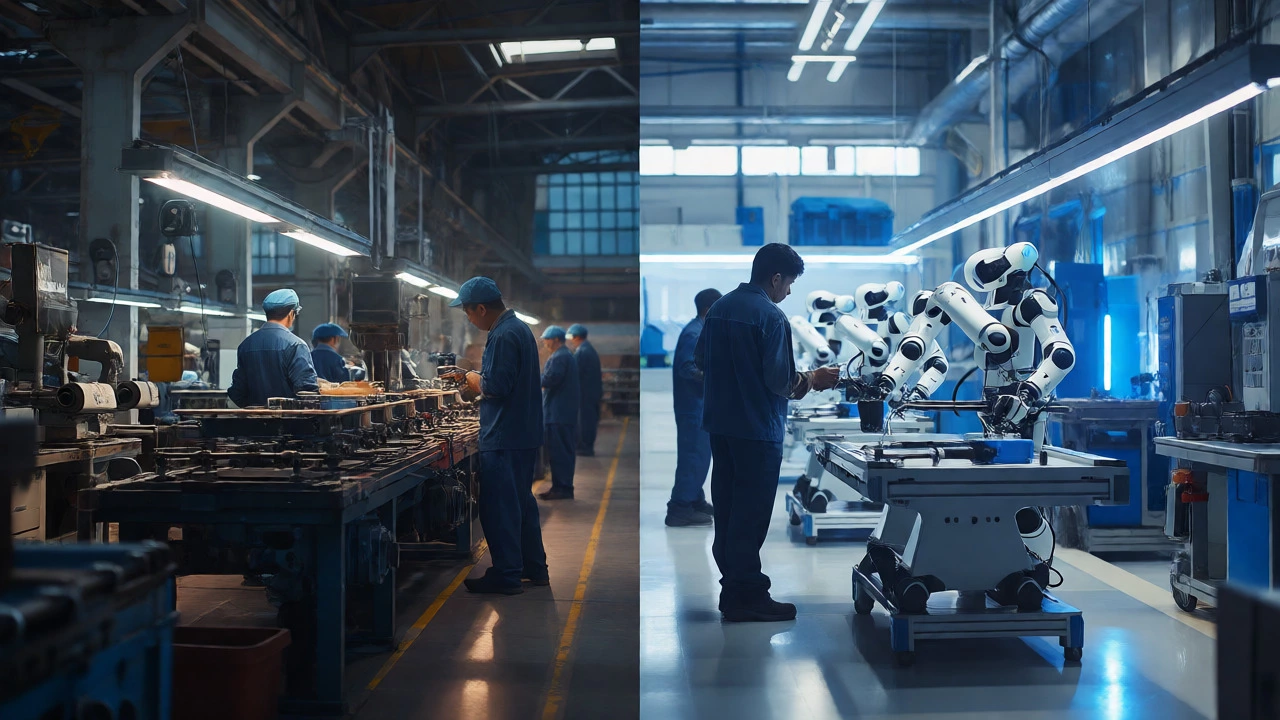
You are standing at a crossroads. On one side is the comfortable, familiar hum of traditional assembly lines-textiles, basic steel, standard plastics. It pays the bills today. On the other side is a noisy, chaotic, high-potential frontier that looks messy right now but promises massive returns by 2036. Most people ignore it because they don't understand the tech yet. That’s your opportunity.
If you’re asking what industry will boom in 10 years, you aren’t just looking for a trend report. You want to know where to put your capital, your skills, and your factory floor space so you aren’t obsolete when the next decade hits. The answer isn’t a single magic bullet. It’s a convergence of energy, automation, and biology. Let’s break down the specific sectors that are moving from "experimental" to "essential," and how you can position yourself within them.
The Green Energy Backbone: Hydrogen and Battery Recycling
Everyone talks about electric vehicles (EVs), but few talk about what happens after the battery dies or how we power the heavy machinery that electricity alone can’t handle. This is where the real money hides.
Green Hydrogen is hydrogen produced using renewable energy sources like wind or solar, resulting in zero carbon emissions during production. By 2036, this won’t be a niche science project; it will be the fuel for shipping, aviation, and heavy industrial processes like steelmaking. Why? Because batteries are too heavy for long-haul ships and planes. They need a dense energy source. Hydrogen provides that.
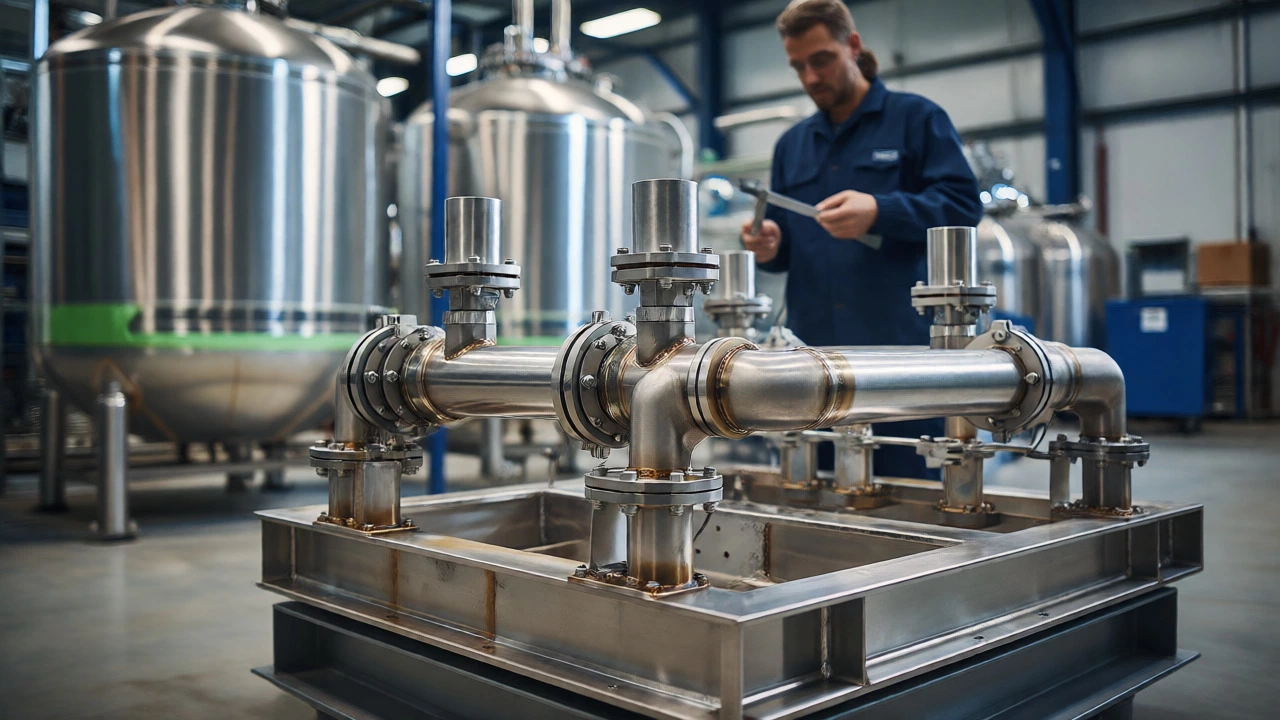
For a manufacturer, this means two things. First, you need equipment that handles high-pressure gas safely. Second, you need supply chains for electrolyzers-the devices that split water into hydrogen and oxygen. If you run a small-scale metal fabrication shop, pivot toward making skids and frames for these electrolyzer units. The demand for precision welding and pressure testing in this sector will skyrocket as governments mandate green fuels for exports.
Then there’s the Battery Recycling market. The process of recovering valuable materials like lithium, cobalt, and nickel from spent electric vehicle batteries. India imports almost all its lithium. By 2036, millions of first-generation EVs will hit their end-of-life. Who will extract those metals? Not the car manufacturers-they’re busy building new cars. Local recycling plants will become urban mines. Setting up a modular recycling unit, even for smaller consumer electronics, puts you ahead of the regulatory curve that will force manufacturers to use recycled content.
Automation That Actually Works: Collaborative Robotics
Forget the sci-fi image of humanoid robots walking around. The boom here is in Collaborative Robots (Cobots). Robots designed to work safely alongside humans without the need for safety cages, typically equipped with sensors to detect human presence. These aren’t replacing workers; they’re augmenting them.
Why will this boom in 10 years? Labor demographics. In many developed nations and increasingly in parts of Asia, the workforce is shrinking. You won’t find enough young people willing to do repetitive, dangerous, or precision-heavy tasks. Cobots solve this. They are cheaper than traditional industrial arms, easier to program (often via drag-and-drop interfaces), and flexible enough to change tasks every shift.
For a business owner, the play isn’t necessarily building the robot. It’s building the ecosystem around it. Think about End-Effectors-the tools attached to the end of a robotic arm, such as grippers, suction cups, or welders, which determine the robot's function. A generic robot arm does nothing until you attach the right hand. There is a massive gap in the market for custom-designed, low-cost end-effectors for SMEs (Small and Medium Enterprises). Big auto-makers have custom setups. Your local food processing plant doesn’t. If you can manufacture specialized grippers for packaging delicate fruits or handling irregular automotive parts, you own a niche that big players ignore.
Advanced Materials: Bioplastics and Composites
Plastic is getting a bad reputation, and rightly so. But plastic isn’t going away-it’s changing. The future belongs to materials that perform like petroleum-based plastics but degrade responsibly or come from renewable sources.
Bioplastics are plastics derived from renewable biomass sources, such as vegetable fats and oils, corn starch, straw, woodchips, or food waste. Currently, they are expensive and often brittle. In 10 years, polymer science will likely crack the code on cost and durability. We are already seeing brands commit to 100% biodegradable packaging by 2030. By 2036, non-compliant packaging will face heavy taxes or bans in major export markets like the EU and US.
This creates a manufacturing goldmine. Injection molding machines that currently make polyethylene bags can be retooled for biopolymers. But here’s the catch: bioplastics behave differently under heat and pressure. They require precise temperature control. If you run an injection molding business, investing in advanced thermal control systems and experimenting with PLA (Polylactic Acid) or PHA (Polyhydroxyalkanoates) blends now prepares you for the inevitable switch. Don’t wait for the law to force you. Get your certification ready.
Similarly, look at Carbon Fiber Composites. Materials made from carbon fibers embedded in a resin matrix, known for being lightweight, strong, and stiff. Historically used in aerospace and luxury cars, costs are dropping due to automated layup techniques. By 2036, expect carbon fiber in mainstream bicycles, e-bikes, and even structural components for affordable housing. Small-scale composite shops that can handle autoclave curing or vacuum infusion will see demand spike as industries seek weight reduction to improve energy efficiency.
The Digital Factory: IoT and Predictive Maintenance
A factory that doesn’t talk is a factory losing money. The concept of Industry 4.0 is the current trend of automation and data exchange in manufacturing technologies, including cyber-physical systems, the Internet of Things, and cloud computing. But by 2036, it will just be called "manufacturing." The distinction between digital and physical will vanish.
The boom here isn’t in selling software; it’s in hardware integration. Machines need sensors. Old machines don’t have them. New ones do. There is a huge market for retrofitting legacy equipment with IoT sensors that monitor vibration, temperature, and energy usage. This enables Predictive Maintenance-a strategy that uses data analysis to predict when equipment failure might occur and schedule maintenance before breakdowns happen.
Imagine running a CNC machining shop. Instead of waiting for a spindle to fail mid-job, costing you downtime and scrap material, your system alerts you three days prior. To offer this value, you don’t need to write complex AI algorithms. You need to manufacture or assemble ruggedized sensor housings and edge-computing gateways that can survive oil mist and dust. This is a hardware problem with a software solution. Manufacturers who provide the "plug-and-play" sensor kits for older Indian machinery will dominate the domestic market.
Comparing the High-Growth Sectors
To help you decide where to focus, let’s compare these emerging areas based on entry barriers and potential returns.
| Sector | Entry Barrier | Growth Driver | Key Skill Needed |
|---|---|---|---|
| Green Hydrogen Equipment | High (Certifications/Safety) | Regulatory Mandates & Export Needs | Pressure Welding & Gas Handling |
| Battery Recycling | Medium (Chemical Processing) | Resource Scarcity & Circular Economy Laws | Chemical Engineering & Logistics |
| Cobot End-Effectors | Low-Medium (Design/Machining) | Labor Shortage & Automation Adoption | Mechanical Design & Rapid Prototyping |
| Bioplastic Packaging | Medium (Material Knowledge) | Consumer Preference & Plastic Bans | Polymer Science & Molding Precision |
| IoT Retrofit Hardware | Low (Electronics Assembly) | Digitalization of Legacy Factories | Embedded Systems & Sensor Integration |
How to Position Yourself Today
You don’t need to build a rocket ship tomorrow. But you do need to start speaking the language of the future. Here is a practical checklist for any manufacturer looking to stay relevant in 2036:
- Audit Your Supply Chain: Are your raw materials dependent on volatile fossil fuels? Start sourcing alternatives. Test biopolymer samples if you mold plastic. Investigate recycled steel suppliers if you work in fabrication.
- Digitize One Process: Pick your most expensive bottleneck machine. Install a simple vibration sensor and a logger. Collect data for six months. Understand what "normal" looks like versus "failing." This builds your internal expertise in predictive maintenance.
- Upskill Your Workforce: Train your machinists on CAD/CAM basics. Train your operators on how to interact with digital dashboards. The worker of 2036 is a technician, not just a laborer.
- Look for Niche Gaps: Don’t try to compete with Tata Motors on EVs. Look at what they buy. Do they need specific brackets? Specialized wiring harnesses? Custom tooling? Serve the giants in their niche needs.
The fear of missing out is real, but paralysis is worse. The industries listed above aren’t speculative fantasies. They are responding to hard constraints: climate change, resource depletion, and demographic shifts. These forces are undeniable. By aligning your manufacturing capabilities with these trends, you aren’t guessing the future; you’re preparing for it.
Is it too late to enter the electric vehicle component market?
No, it is not too late, but the landscape has changed. Early entrants focused on batteries and motors. Now, the opportunities lie in peripheral components like charging infrastructure hardware, lightweight chassis parts, and specialized cooling systems. Additionally, the aftermarket for repairs and upgrades for existing EV fleets will grow significantly as the installed base matures over the next decade.
What is the biggest risk in switching to bioplastics?
The primary risks are inconsistent material quality and higher raw material costs compared to conventional plastics. Bioplastics can also have different shelf lives and moisture absorption rates. Mitigation involves rigorous supplier vetting, investing in precise temperature-controlled machinery, and educating customers on proper storage conditions to prevent product degradation before use.
Do I need to replace my old machines for Industry 4.0?
Not necessarily. Many older machines can be retrofitted with external sensors and edge computing devices that collect data without requiring a full replacement. This approach, often called "brownfield automation," allows manufacturers to gain digital insights and predictive maintenance capabilities while extending the lifespan of proven, reliable mechanical assets.
How will labor shortages affect manufacturing in India?
While India has a large population, the number of skilled technical workers is lagging behind demand. Unskilled labor may remain available, but wages will rise. This will accelerate the adoption of automation and collaborative robots to handle repetitive tasks, allowing the limited pool of skilled technicians to focus on supervision, programming, and complex assembly tasks.
What role does government policy play in these booms?
Government policies act as accelerators. Subsidies for green hydrogen, production-linked incentives (PLI) for electronics and batteries, and strict emission norms drive investment. Monitoring policy changes is crucial because tax breaks and compliance requirements can suddenly make certain manufacturing processes more profitable or mandatory overnight.