Global Electronics Manufacturing Strength Analyzer
Taiwan Profile
The undisputed king of advanced logic chips.
2026 Market Insight
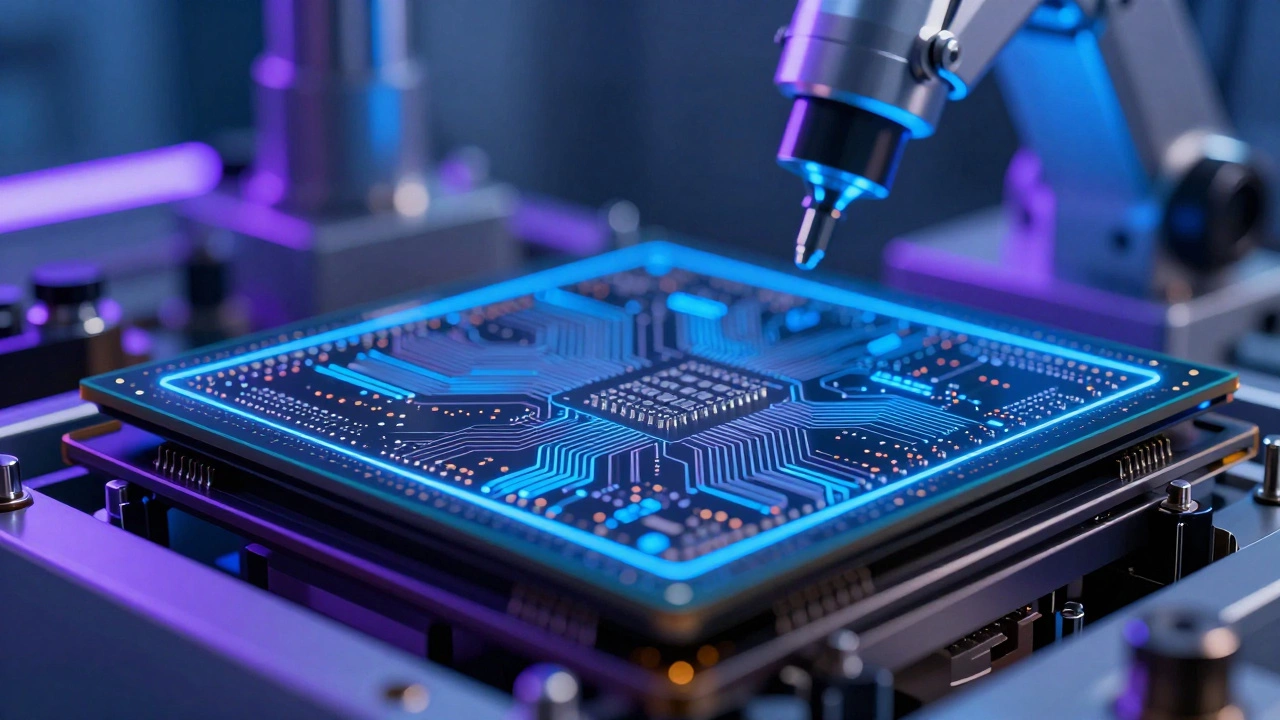
TSMC remains the leader in cutting-edge processors for flagship smartphones and AI servers, manufacturing at 3nm nodes with yield rates hard to replicate elsewhere.
Walk into any tech store today, and you’ll see a familiar pattern. The sleek smartphone in your hand might have been designed in California, assembled in Vietnam, but its chips likely came from Taiwan or South Korea. We assume that "best quality" means one specific country. But in 2026, that assumption is dangerously outdated. The truth is, no single nation dominates every layer of the electronics supply chain anymore. Instead, we are seeing a fractured, specialized global landscape where "quality" depends entirely on what part of the device you’re talking about.
If you are looking for raw processing power, you look East. If you want robust consumer hardware assembly, you look Southeast. And if you are betting on the next decade of cost-effective, high-volume manufacturing with government backing, you look to India. This isn't just about national pride; it's about understanding where the real value lies in the modern electronics ecosystem. Let’s break down who actually makes the best electronics, layer by layer.
The Chipmakers: Where Raw Power Comes From
Before we talk about the phone casing or the screen, we have to talk about the brain. In the world of semiconductors, "quality" is measured in nanometers and yield rates. Here, the hierarchy is strict. TSMC, based in Taiwan, remains the undisputed king of advanced logic chips. They produce the cutting-edge processors found in the latest flagship smartphones and AI servers. Their ability to manufacture at 3nm and moving toward 2nm nodes gives them a quality edge that is hard to replicate.
However, TSMC isn’t alone. Samsung Electronics from South Korea is their only true rival in the premium segment. Samsung produces both the memory (DRAM/NAND) and the processors, offering a vertical integration that ensures tight quality control between components. For memory chips, which determine how fast your apps load and how much data you can store, South Korea holds roughly 60% of the global market share. If your definition of "best quality" involves reliability and speed in core components, these two Asian giants are still setting the standard.
But here is the catch: making a chip is different from building a device. A perfect processor inside a poorly assembled phone is useless. This leads us to the next layer: assembly and final product quality.
The Assemblers: Precision and Scale
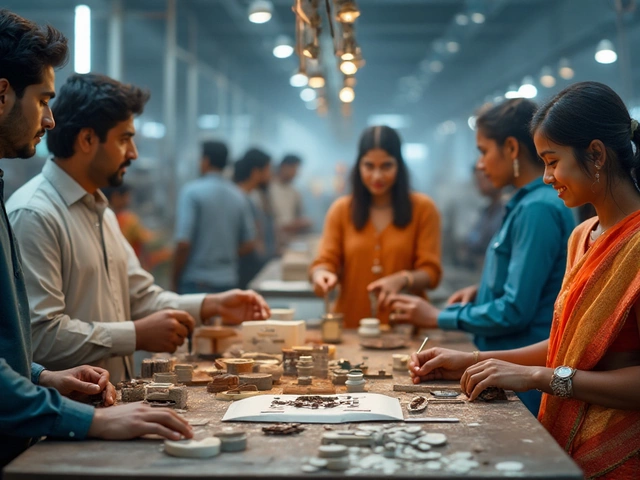
For years, China was the answer to this question. It wasn’t just about cheap labor; it was about an unparalleled supply chain density. You could source a screw, a screen, and a battery within a 50-mile radius in Shenzhen. That proximity reduced errors and sped up production, leading to consistent quality. Today, that dominance is shifting.
Vietnam has emerged as the new hub for mid-to-high-end electronics assembly. Companies like Apple have moved significant iPhone production lines there. Why? Because Vietnam offers a stable political environment, competitive labor costs, and increasingly skilled technicians. The quality of devices coming out of Vietnamese factories is virtually indistinguishable from those made in China five years ago. In fact, due to newer machinery and less wear-and-tear on older infrastructure, some argue the defect rates in Vietnam are even lower.
Yet, assembly is only half the battle. The real story of 2026 is happening in South Asia, where a massive shift in policy is redefining what "manufacturing quality" means for the future.
India: The Rising Giant in Electronics Manufacturing
Let’s talk about India. Just a few years ago, India was primarily a consumer market. Today, it is becoming a critical production hub. This isn't accidental. It’s the result of aggressive policy interventions, most notably the Production Linked Incentive (PLI) scheme. This government program provides cash incentives to companies that increase domestic manufacturing, effectively subsidizing the setup of high-quality factories.
The results are tangible. In 2025-2026, India became the second-largest mobile phone manufacturer in the world, right after China. But quantity doesn't always equal quality. So, how does Indian-made electronics stack up?
Major global brands like Apple now produce a significant portion of their iPhones in India. These aren't budget models; they include the high-end Pro series. The quality control standards imposed by these multinational corporations are identical regardless of location. An iPhone made in Tamil Nadu undergoes the same rigorous testing as one made in Zhengzhou. In many cases, Indian facilities use newer automation technology, reducing human error further.
Beyond phones, India is expanding into laptops, TVs, and small appliances. Brands like Xiaomi, Samsung, and OnePlus have deepened their roots here. The local ecosystem is maturing. We are seeing more component manufacturing-batteries, displays, and circuit boards-moving in-house rather than being imported fully built. This vertical integration is key to long-term quality consistency.
Why "Best" Is No Longer a Single Answer
To understand who makes the best electronics, you need to stop looking for a single winner. The industry has fragmented into specialized roles. Here is a breakdown of where each region excels:
| Country/Region | Primary Strength | Quality Indicator | Key Products |
|---|---|---|---|
| Taiwan | Semiconductor Fabrication | Nanometer precision, Yield rate | Advanced Logic Chips, GPUs |
| South Korea | Memory & Display Tech | Bit density, Pixel clarity | DRAM, NAND Flash, OLED Screens |
| Vietnam | Consumer Electronics Assembly | Defect per million units (DPMU) | Smartphones, Laptops, Wearables |
| India | High-Volume Mobile & Component Mfg | Supply chain resilience, Cost-efficiency | Mobile Phones, Tablets, EV Batteries |
| China | Component Supply Chain | Speed to market, Variety | Circuit Boards, Sensors, Cables |
Notice how China still plays a vital role. While final assembly has moved, China remains the world’s factory for intermediate components. The capacitors, resistors, and sensors that go into every device often come from Chinese suppliers. Their quality has improved dramatically over the last decade, closing the gap with Japanese and European suppliers in many categories.
The Role of Automation in Quality Control
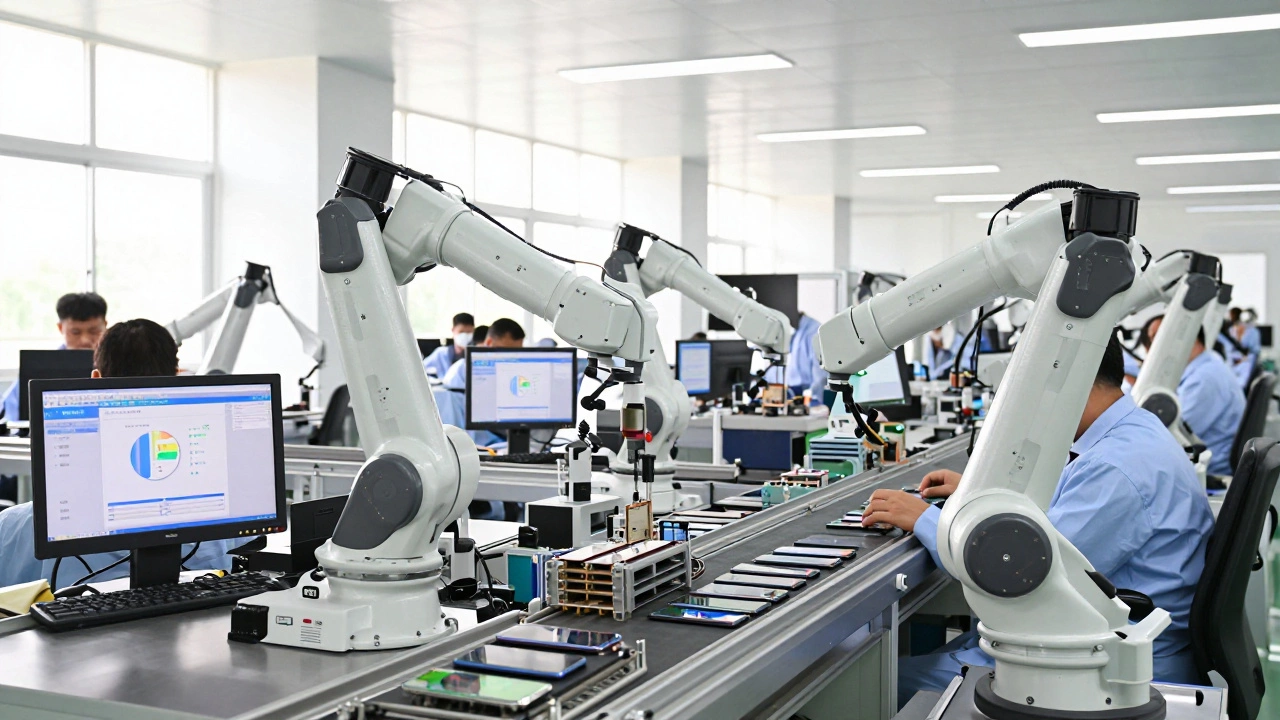
One factor that levels the playing field across all these countries is automation. In 2026, high-quality electronics manufacturing is less about human skill and more about robotic precision. Whether a factory is in Bengaluru, Ho Chi Minh City, or Austin, Texas, the assembly lines are dominated by robots.
This means that "national quality" is increasingly defined by the technology the factory uses, not the nationality of the workers. Indian manufacturers are investing heavily in Industry 4.0 technologies-IoT-enabled machines that monitor temperature, humidity, and pressure in real-time. This data-driven approach ensures that every unit produced meets exact specifications. When a robot places a camera module onto a motherboard, it doesn’t matter if the robot is in India or Germany; the placement accuracy is determined by the machine’s calibration, not the local workforce.
However, human oversight remains crucial for quality assurance. Countries with strong engineering education systems, like India and South Korea, have an advantage here. Engineers in these regions are trained to troubleshoot complex issues and optimize processes, ensuring that the automated systems run smoothly. This blend of high-tech automation and skilled human management is what defines top-tier quality today.
Challenges Facing New Manufacturing Hubs
It’s not all smooth sailing. For India and other emerging hubs, challenges remain. One major issue is the depth of the supply chain. While India can assemble phones, it still imports many critical components. This reliance on imports can introduce delays and quality inconsistencies if global supply chains are disrupted.
Another challenge is environmental sustainability. High-quality electronics manufacturing requires clean energy and strict waste management protocols. Countries that fail to meet international environmental standards may face trade barriers or reputational damage. India is addressing this by pushing for green manufacturing practices, including solar-powered factories and recycling programs for e-waste.
Logistics also play a role. Efficient transportation networks ensure that components arrive on time and in good condition. India’s investment in infrastructure, such as dedicated freight corridors and port upgrades, is helping to improve logistics efficiency, which directly impacts the final quality of exported goods.
What This Means for Consumers and Businesses
So, who makes the best electronics? If you are a consumer buying a smartphone, you don’t need to worry about the country of origin as much as the brand’s reputation. Major brands enforce strict quality standards regardless of where the device is made. An iPhone made in India is subject to the same quality checks as one made elsewhere.
For businesses sourcing electronics, the decision is more nuanced. You need to consider lead times, cost, and risk diversification. Relying on a single country is risky. Many companies are adopting a "China Plus One" strategy, keeping some production in China while adding capacity in India or Vietnam. This diversification helps mitigate risks like geopolitical tensions or natural disasters.
Looking ahead, the definition of "best quality" will continue to evolve. As we move toward more integrated systems, such as smart homes and autonomous vehicles, the importance of software-hardware integration will grow. Countries that excel in both manufacturing and software development, like India and South Korea, may gain a competitive edge.
Conclusion: A Collaborative Future
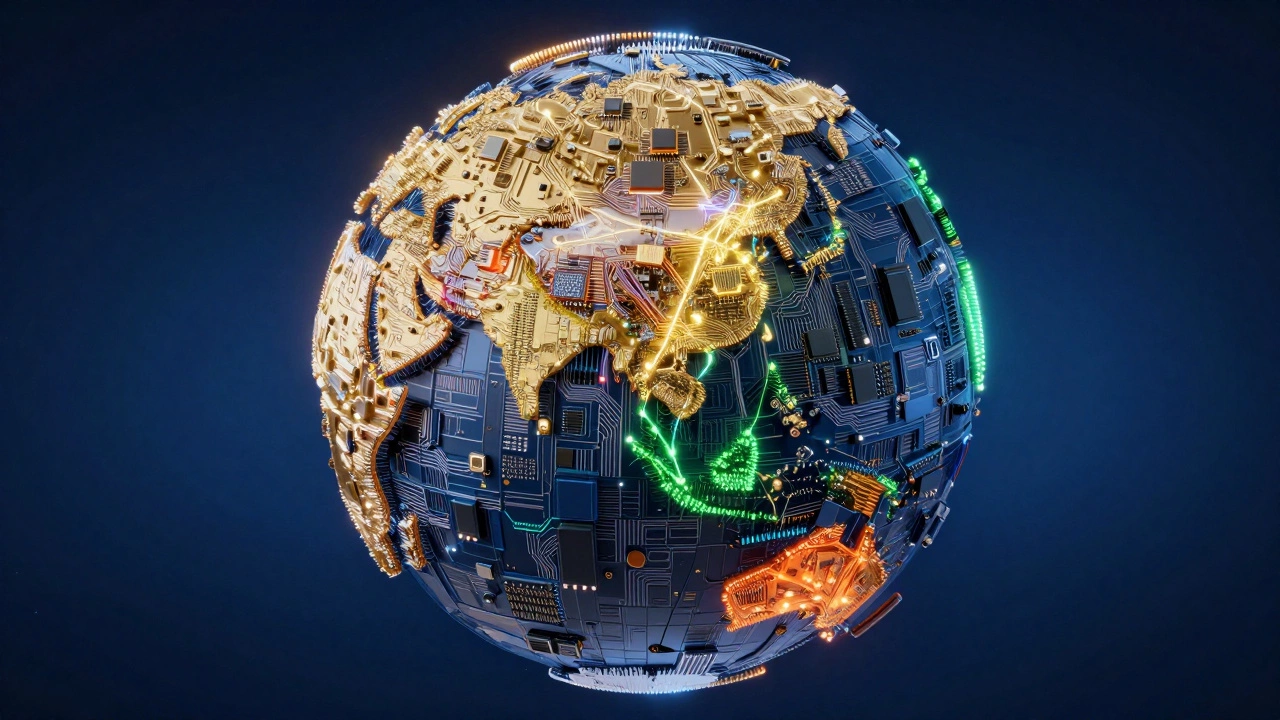
In 2026, the electronics industry is no longer a zero-sum game. It’s a collaborative effort where each country plays to its strengths. Taiwan provides the brains, South Korea provides the memory, Vietnam and India provide the hands, and China provides the parts. The "best" quality comes from this global synergy, not from any single nation working in isolation.
As consumers, we benefit from this competition and cooperation. We get better products at lower prices, with faster innovation cycles. As the industry continues to evolve, keep an eye on India’s rise. With strong government support, a growing talent pool, and increasing investment in technology, India is poised to become a leader in high-quality electronics manufacturing in the coming years.
Is electronics manufactured in India as good as those made in China?
Yes, for major global brands, the quality is identical. Companies like Apple and Samsung enforce the same strict quality control standards in their Indian factories as they do in China. In many cases, Indian facilities use newer equipment, which can lead to even higher precision. However, for smaller, unbranded electronics, quality may vary depending on the manufacturer's adherence to international standards.
Which country makes the highest quality semiconductors?
Taiwan, through TSMC, currently leads in the production of advanced logic semiconductors used in high-performance computing and smartphones. South Korea’s Samsung is a close competitor, particularly in memory chips and system-on-chip designs. Both countries invest heavily in R&D to maintain their quality leadership.
How does the PLI scheme affect electronics quality in India?
The Production Linked Incentive (PLI) scheme encourages manufacturers to set up state-of-the-art facilities in India. By providing financial incentives, the government helps companies afford the latest automation and quality control technologies. This leads to higher production standards and reduces reliance on imported finished goods, improving overall product consistency.
Why is Vietnam becoming a popular choice for electronics assembly?
Vietnam offers a combination of low labor costs, political stability, and strategic trade agreements. Its proximity to China allows for easy access to components, while its growing skilled workforce ensures high-quality assembly. Many Western brands have shifted production to Vietnam to diversify their supply chains and reduce dependency on China.
Does the country of origin matter when buying electronics?
For reputable brands, the country of origin matters less than the brand’s quality control processes. Major manufacturers maintain consistent standards across all their global factories. However, for generic or unknown brands, the country of origin can be an indicator of regulatory compliance and build quality. Always check for certifications like ISO 9001 or CE marking.