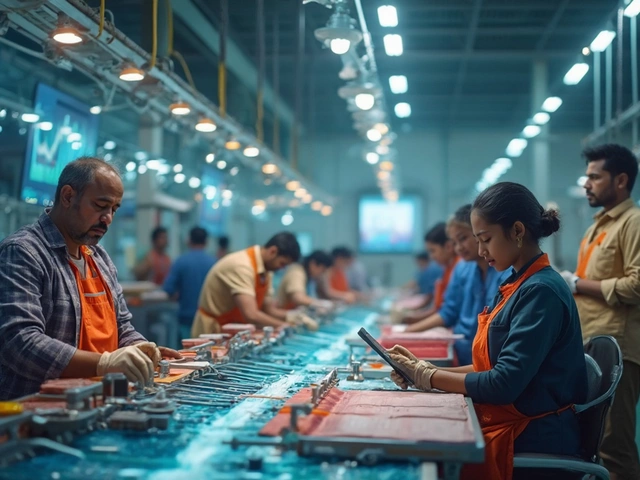
Mechanical Processing in Manufacturing: What It Is and How It Powers Indian Industry
When you think of manufacturing, you might picture assembly lines or robots, but the real foundation is mechanical processing, the set of techniques used to shape, cut, drill, or form raw materials like metal, plastic, or wood into precise components. Also known as material removal, it’s the step that turns a block of steel into a gear, a pipe, or a housing for an HVAC unit. Without it, nothing works—no compressor, no duct system, no motor. This isn’t theory. It’s the quiet engine behind every piece of equipment made in India’s factories.
Most mechanical processing happens through CNC machining, a computer-controlled method that cuts metal with extreme accuracy using rotating tools. It’s what lets small shops in Pune or Ludhiana produce parts that match global standards. Then there’s metal fabrication, the process of cutting, bending, and assembling sheet metal into frames, housings, or ducts. You’ll find this in nearly every HVAC unit made in India, from rooftop units to industrial chillers. These aren’t just random steps—they’re the backbone of making things that last, fit, and perform under pressure.
What makes mechanical processing so critical in India? Cost. Speed. Scalability. A factory in Gujarat can take a raw aluminum billet and turn it into a heat exchanger fin in under 30 minutes using CNC. That’s how local manufacturers compete with imports. And with government schemes like MOM pushing production growth, more small factories are investing in these tools—not because they’re flashy, but because they’re necessary. You don’t need to be a giant to do this. Even a shop with one lathe and one skilled operator can build a profitable niche by mastering just one type of mechanical processing.
It’s not just about machines. It’s about precision. A single millimeter off in a valve housing can cause a refrigerant leak. A slight misalignment in a shaft can wear out a motor in weeks. That’s why the best manufacturers don’t just buy equipment—they train their teams, calibrate tools daily, and test every batch. You’ll see this in posts about small factory costs, where the biggest expense isn’t land or permits—it’s the machinery that does the actual shaping. And you’ll find it in articles about steel fabrication, food processing lines, and even pharmaceutical equipment—all rely on the same core principle: turning raw stuff into something exact.
So if you’re wondering how India’s manufacturing scene keeps growing, the answer isn’t just cheap labor or big policies. It’s the quiet, relentless work of mechanical processing. Whether it’s cutting copper tubes for AC units or drilling holes in steel frames for industrial fans, this is where the real magic happens. Below, you’ll find real examples from Indian factories—how they set up their lines, what tools they use, and how they cut costs without cutting corners.