
Small Manufacturing Business Feasibility Calculator
Enter Your Estimates
Rent, salaries, insurance, utilities
Raw materials, packaging, direct labor per item
Price at which you sell one unit to customers
Your Business Metrics
Based on your inputs, here is what you need to achieve:
* Break-even means covering all costs. Sales beyond this point generate pure profit.
Starting a small manufacturing business is a venture that transforms raw materials into finished goods on a limited scale, often serving local or niche markets with high agility and lower overhead costs compared to large industrial plants might sound like a distant dream for many, but it is one of the most tangible ways to build wealth in India today. You don’t need a sprawling factory complex or millions in upfront capital to begin. In fact, some of the most profitable ventures start in a garage, a rented shed, or even a home kitchen. The real challenge isn't finding an idea; it's navigating the regulatory maze, securing the right equipment, and ensuring your product has a market before you produce your first unit.
The landscape in 2026 is different from five years ago. With government push under initiatives like Make in India is a flagship campaign launched by the Government of India to encourage companies to manufacture their products in India, offering incentives such as tax benefits, land allocation, and ease of doing business reforms, there are more opportunities than ever for small players. However, competition is fierce. To succeed, you need a clear plan that addresses production efficiency, compliance, and sales channels simultaneously.
Identify a Viable Product Niche
The biggest mistake new entrepreneurs make is starting too broad. "I want to manufacture electronics" is not a plan. "I want to manufacture custom silicone phone cases for gamers" is a plan. You need to pick a niche where you can compete on quality, speed, or price against larger incumbents. Look for gaps in the local market. Is there a demand for eco-friendly packaging? Are local farmers struggling to find affordable storage containers?
Consider these high-potential sectors for small-scale entry:
- Food Processing: Pickles, spices, or ready-to-eat meals have low entry barriers but require strict hygiene compliance.
- Packaging Materials: Corrugated boxes, paper bags, and biodegradable cutlery are in constant demand due to e-commerce growth.
- Home Decor: Handcrafted furniture, candles, or decorative items appeal to premium buyers willing to pay for uniqueness.
- Textile Accessories: Buttons, zippers, or embroidered patches serve larger garment manufacturers who outsource these components.
Before committing, validate your idea. Talk to potential customers. If you're making organic soap, ask local boutiques if they would stock it. If you're producing metal brackets, approach construction contractors. Do not assume demand exists just because you think the product is good. Real-world feedback saves months of wasted effort.
Conduct a Detailed Feasibility Study
A feasibility study is not just paperwork; it is your reality check. It answers whether your business can survive financially. You need to calculate three things: fixed costs, variable costs, and break-even point. Fixed costs include rent, machinery depreciation, and salaries. Variable costs include raw materials, electricity, and packaging per unit.
Let’s say you want to start a candle-making unit. Your fixed cost might be ₹50,000 per month (rent + salary). Each candle costs ₹30 to make (wax, wick, jar) and sells for ₹100. Your contribution margin is ₹70 per candle. To break even, you need to sell roughly 715 candles a month. That’s about 24 candles a day. Is that realistic? Can you reach enough customers? If the answer is no, either raise prices, reduce costs, or pivot the product. This math prevents emotional decision-making.
Also, analyze your competitors. Who else is selling this? What are their strengths? Maybe they have better branding, or maybe their quality is poor. Find your angle. Perhaps you offer faster delivery or customizable designs. Understanding the competitive landscape helps you position yourself effectively from day one.
Navigate Legal Registrations and Compliance
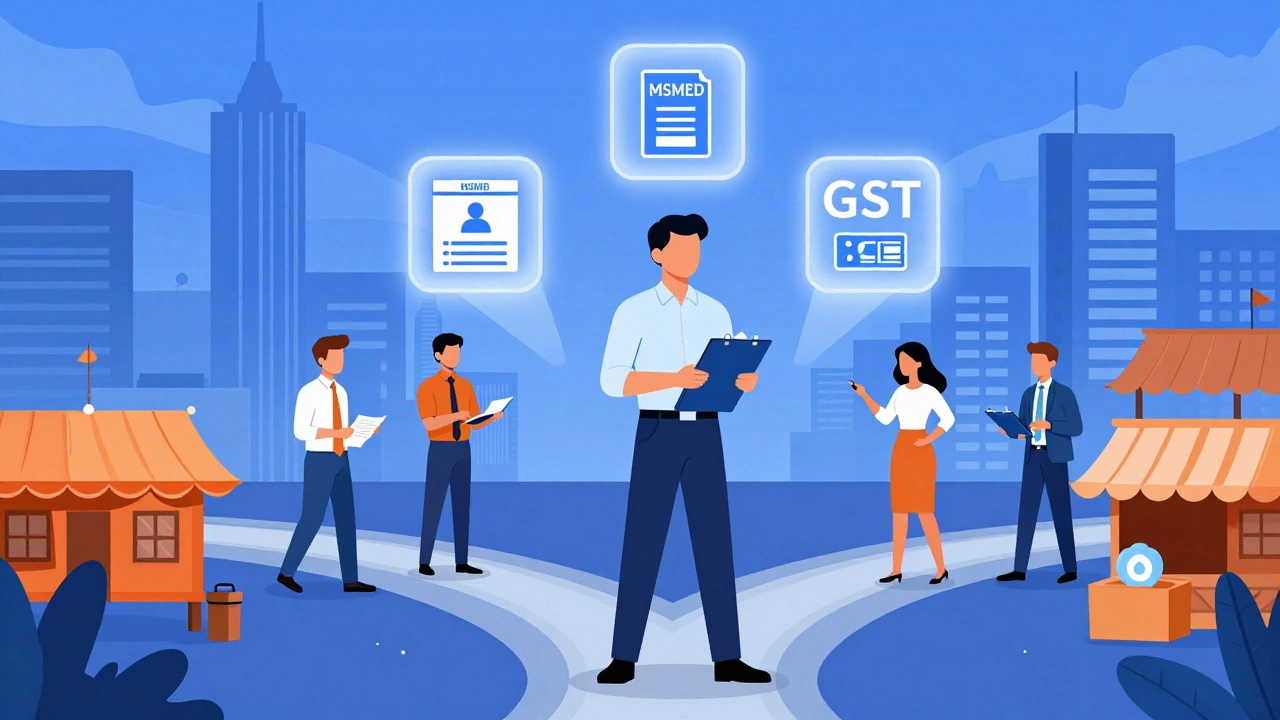
In India, bureaucracy can be daunting, but recent reforms have simplified processes significantly. For a small manufacturing unit, you typically need several registrations depending on your scale and location.
| Registration | Purpose | When Required |
|---|---|---|
| MSME Registration | Access to government schemes, subsidies, and priority sector lending | Mandatory for all micro, small, and medium enterprises |
| GST Registration | Collect and remit Goods and Services Tax on sales | If annual turnover exceeds ₹20 lakh (₹10 lakh in special category states) |
| Udyam Aadhar | Digital identity for MSMEs replacing older DIC certificates | Immediately after business commencement |
| Factory License | Regulation of working conditions and safety standards | If employing 10+ workers with power or 20+ without power |
| Pollution Control Board Consent | Environmental clearance for emissions and waste disposal | Depends on industry category (Green, Orange, Red) |
Start with MSME Registration is a free online process that provides a unique identification number to businesses, enabling them to access various government benefits including interest subvention, trademark registration fee reimbursement, and protection against delayed payments. It is free and takes less than a day. Then handle GST if you expect significant sales. Don’t ignore environmental norms. Even small units producing plastic or chemicals need consent from the State Pollution Control Board. Non-compliance can lead to heavy fines or shutdowns. Consult a local chartered accountant or CA to ensure you file correctly. They charge a fee, but it saves you from legal headaches later.
Secure Funding and Manage Cash Flow
Most small manufacturing businesses fail not because of bad products, but because of cash flow crunches. You pay for raw materials upfront, but customers may pay you in 30-60 days. This gap can kill your business if you aren’t prepared. Estimate how much capital you need for at least six months of operations.
Funding options include:
- Personal Savings: The easiest source, but risky if the business fails.
- Bank Loans: Many banks offer collateral-free loans up to ₹50 lakh under the Pradhan Mantri MUDRA Yojana. Interest rates vary between 7% to 12%.
- Government Subsidies: Schemes like PMEGP (Prime Minister’s Employment Generation Programme) offer up to 35% subsidy on project cost for eligible candidates.
- Venture Capital/Angel Investors: Rare for traditional manufacturing unless you have a scalable tech component or innovative business model.
Apply for subsidies early. The application process is lengthy and requires detailed project reports. Banks also scrutinize your financial health. Prepare a robust business plan showing projected revenue, expenses, and profit margins. Transparency builds trust with lenders. Never mix personal and business finances. Open a separate current account immediately. This makes accounting easier and protects your personal assets in case of liability.
Source Equipment and Raw Materials
Your machinery determines your production capacity and quality. Don’t buy the cheapest option blindly. Visit trade shows, talk to suppliers, and read reviews. Consider maintenance costs and spare part availability. A machine that breaks down frequently will halt your production and damage customer trust.
For raw materials, build relationships with multiple suppliers. Relying on one vendor is risky-if they raise prices or face shortages, you’re stuck. Negotiate bulk discounts where possible. Quality control is critical. Test incoming materials before using them. Poor-quality inputs lead to defective outputs, which means waste and unhappy customers. Implement simple checks at each stage of production. For example, if you’re making garments, inspect fabric for tears before cutting. Catching errors early saves money.
Location matters too. Choose a site close to your target market or raw material sources to reduce logistics costs. Industrial estates often provide infrastructure like power backup and waste treatment, which reduces your initial investment. Check local zoning laws to ensure manufacturing is permitted in your chosen area.
Build Sales Channels and Marketing Strategy
Producing goods is only half the battle. Selling them is the other half. Many manufacturers struggle here because they focus solely on production efficiency. You need a marketing plan from day one. Define your target audience clearly. Are you selling to retailers, wholesalers, or end consumers?
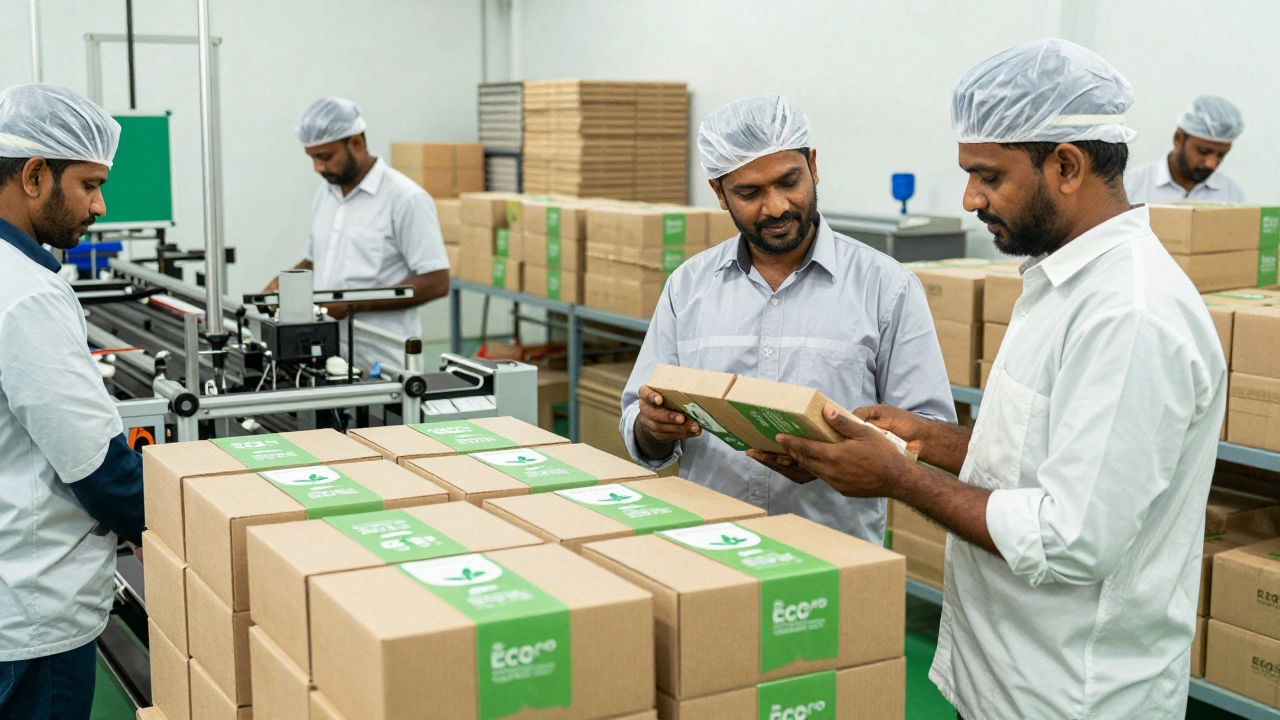
Online platforms are powerful tools. List your products on B2B marketplaces like IndiaMART, TradeIndia, or Amazon Business. These platforms connect you with buyers actively searching for your products. Create a professional website showcasing your capabilities, certifications, and sample images. Social media, especially Instagram and LinkedIn, can help build brand awareness. Share behind-the-scenes content of your manufacturing process to humanize your brand.
Networking is equally important. Attend industry exhibitions and trade fairs. Meet potential distributors face-to-face. Offer samples to key buyers. Word-of-mouth referrals are incredibly effective in B2B sectors. Deliver on time and maintain consistent quality. One late delivery or defective batch can ruin your reputation. Build long-term relationships rather than chasing one-off orders. Loyalty leads to repeat business and steady cash flow.
Scale Sustainably and Adapt
Growth should be gradual. Don’t expand too quickly. Ensure your current operations are stable before adding new lines or hiring more staff. Monitor key performance indicators (KPIs) like production yield, defect rate, and customer acquisition cost. Use data to make decisions. If a product line isn’t profitable, consider discontinuing it or improving its efficiency.
Stay updated with industry trends. Technology evolves rapidly. Automation can reduce labor costs and improve precision. Explore digital tools for inventory management and order tracking. Customer preferences change; adapt your product offerings accordingly. Sustainability is becoming a major buying factor. Using eco-friendly materials or reducing waste can give you a competitive edge. Regularly review your business strategy and adjust based on market feedback and economic conditions.
What is the minimum capital required to start a small manufacturing business in India?
The minimum capital varies widely depending on the product and scale. Simple businesses like candle making or food processing can start with ₹50,000 to ₹2 lakh. More complex setups involving heavy machinery, such as plastic molding or metal fabrication, may require ₹5 lakh to ₹10 lakh or more. Always include buffer funds for unexpected expenses and initial marketing.
Do I need a factory license for a home-based manufacturing unit?
Generally, no. Factory licenses are required only if you employ 10 or more workers with power or 20 or more without power. Home-based units usually fall under micro-enterprises and do not need this license. However, you still need MSME registration and possibly local municipal permissions depending on your city’s rules.
Which government scheme offers the best subsidy for manufacturing startups?
The Prime Minister’s Employment Generation Programme (PMEGP) is highly regarded. It offers up to 35% subsidy on total project cost for general category beneficiaries and up to 35% for SC/ST/OBC categories. Eligibility depends on meeting specific criteria regarding age, education, and project viability. Applications are processed through scheduled banks.
How long does it take to complete all necessary registrations?
MSME and Udyam Aadhar registrations can be completed online within 1-2 days. GST registration typically takes 7-15 working days if documents are correct. Factory licenses and pollution control consents may take 30-90 days depending on state bureaucracy and complexity of the project. Plan ahead to avoid delays in launching operations.
Is it better to buy new or used machinery for a startup?
Used machinery can save 30-50% of costs, making it attractive for tight budgets. However, it carries risks of hidden defects and higher maintenance needs. New machines come with warranties and support. For critical production steps, invest in new equipment. For secondary processes, consider reputable second-hand options. Always test machines before purchase.