Indian Chemical Giants Comparison Tool
Select two companies below to compare their scale, focus areas, and global standing. This tool helps visualize why Reliance Industries is considered the largest, while others dominate specific niches.
Ask ten people who runs the biggest chemical shop in India, and you’ll get a mix of answers. Some will say Tata Chemicals because they see soda ash everywhere. Others might guess Pidilite because everyone knows Fevicol. But if we look at hard numbers-revenue, production capacity, and global footprint-the answer is clear. Reliance Industries Limited (RIL) is the undisputed king of the Indian chemical sector. It’s not just about being big; it’s about vertical integration that few other companies can match.
Why does this matter to you? Maybe you’re an investor looking for stability, a supplier trying to find a reliable buyer, or a student researching industrial giants. Understanding who leads the pack helps you understand where the money flows, where innovation happens, and where the industry is heading. Let’s break down why RIL holds the crown, who its closest rivals are, and what makes the Indian chemical landscape so unique right now.
The Case for Reliance Industries
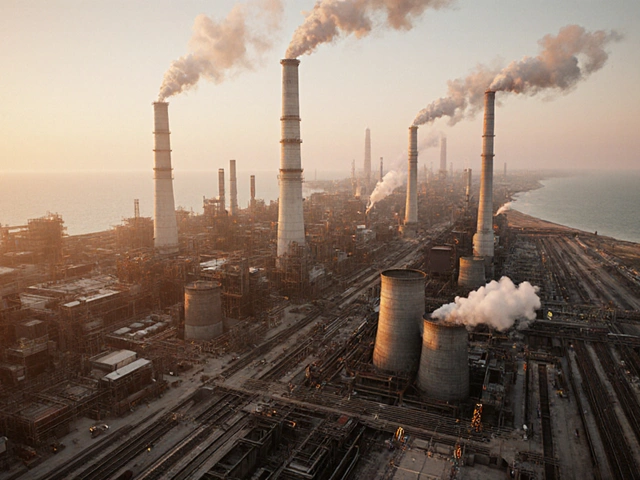
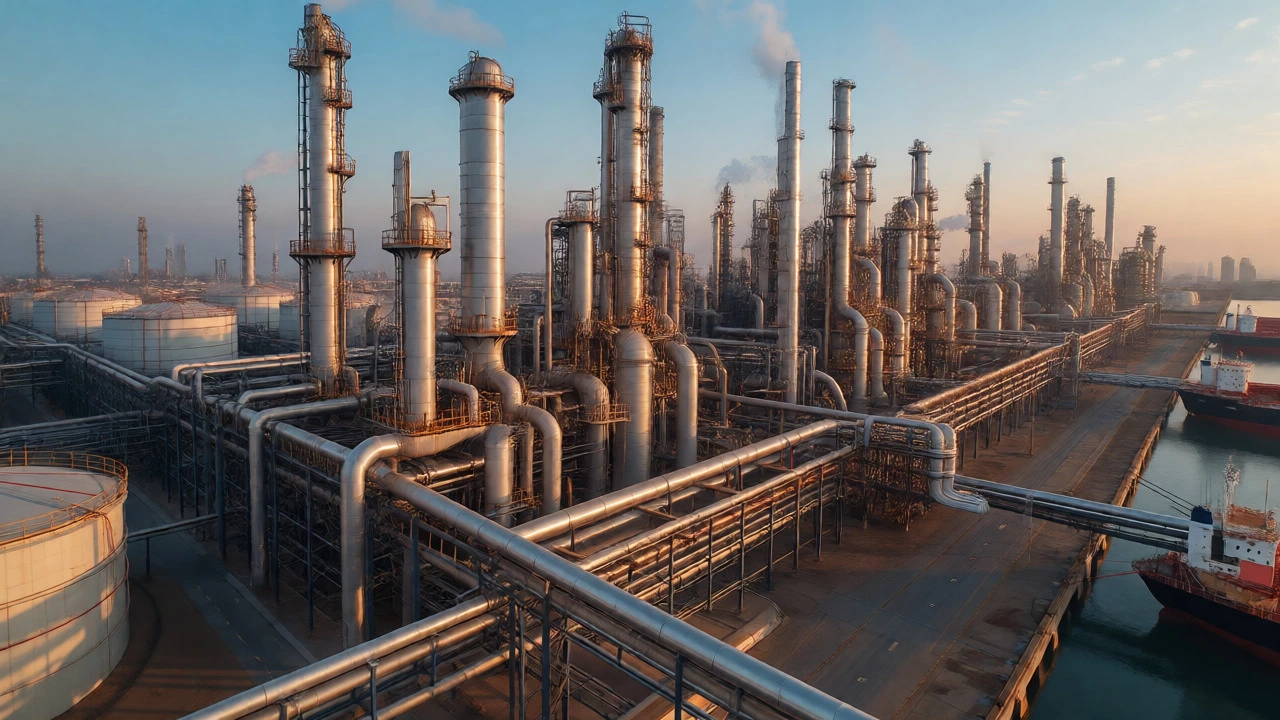
Reliance Industries isn’t just a chemical company; it’s an energy conglomerate that treats chemicals as a core pillar of its business model. Headquartered in Mumbai, RIL operates the world’s largest integrated refining complex in Jamnagar, Gujarat. This facility processes crude oil into petrochemicals, which are then used to make everything from plastics to synthetic fibers.
Reliance Industries is a multinational conglomerate holding company with significant operations in energy, textiles, retail, telecommunications, and media. In the context of chemicals, their strength lies in scale. They produce millions of tonnes of polymers, polyesters, and elastomers annually. Their ability to control the entire chain-from importing crude oil to selling finished plastic goods-gives them a massive cost advantage. When global oil prices fluctuate, RIL can adjust margins across its segments, keeping its chemical arm profitable even when competitors struggle.
Consider this: RIL’s petrochemical segment alone generates revenue that dwarfs most standalone chemical companies. While others buy raw materials from suppliers like RIL, Reliance produces its own feedstock. This vertical integration means they aren’t at the mercy of market volatility in the same way smaller players are. For anyone tracking top chemical companies, RIL’s dominance is structural, not accidental.
Key Competitors and Specialized Leaders
While RIL wins on sheer size, "biggest" doesn’t always mean "best" for every product category. The Indian chemical industry is fragmented, with specialized leaders dominating specific niches. If you’re looking for agrochemicals, your list changes completely. If you need specialty chemicals for pharmaceuticals, another player takes the lead.
Let’s look at the other heavyweights that often appear in conversations about the biggest chemical company in India:
- Pidilite Industries: You know them for adhesives and sealants. They dominate the consumer-facing side of chemicals. With brands like M-Seal and Bondtite, they have incredible brand recall. However, their revenue is a fraction of RIL’s. They win on profitability and market share in specific categories, not total volume.
- Tata Chemicals: A part of the Tata Group, they are one of the world’s largest producers of soda ash and salt. Their global presence is strong, with operations in Africa and Europe. They are crucial for glass and detergent manufacturing but lack the diversified energy base of RIL.
- UPL Ltd (United Phosphorus Limited): If your interest is agriculture, UPL is a giant. They are among the top five crop protection companies globally. Their focus is entirely on agrochemicals, making them a leader in that specific sub-sector rather than general chemicals.
- Gujarat Fluorochemicals (GFL): A specialist in fluorochemicals and refrigerant gases. They are critical for industries ranging from automotive ACs to semiconductor manufacturing. Their niche expertise allows them to command premium pricing, but their overall turnover is lower than the mass-market giants.
Each of these companies solves different problems. RIL solves for volume and basic materials. Pidilite solves for consumer convenience. UPL solves for food security through better crop yields. Knowing which problem you’re trying to solve determines which company matters most to you.
Understanding the Scale: Revenue and Production Capacity
To truly grasp why RIL is the biggest, we need to look at the data. Financial reports and industry standards provide a clear picture of market position. Here is how the major players compare in terms of recent annual performance and primary focus areas.
| Company Name | Primary Chemical Segment | Estimated Annual Revenue (Approx.) | Global Ranking Context |
|---|---|---|---|
| Reliance Industries | Petrochemicals, Polymers, Fibers | $100 Billion+ (Total Group) | Top 5 Global Petrochemical Player |
| Pidilite Industries | Adhesives, Sealants, Construction Chem | $1.5 - $2 Billion | Leader in Indian Adhesive Market |
| Tata Chemicals | Soda Ash, Salt, Specialty Products | $3 - $4 Billion | Top 3 Global Soda Ash Producer |
| UPL Ltd | Agrochemicals, Crop Protection | $6 - $7 Billion | Top 5 Global Agrochemical Player |
| Hindustan Unilever | Consumer Goods (FMCG) Chemicals | $9 - $10 Billion | Largest FMCG Company in India |
Note that HUL is included here because while it’s an FMCG company, its chemical processing capabilities for soaps, detergents, and personal care products are massive. However, strictly speaking, HUL buys many raw materials rather than producing basic chemicals at scale like RIL or Tata. This distinction is vital. RIL produces the raw material; HUL turns it into consumer goods.
Why Vertical Integration Wins in Chemicals
The reason Reliance stays ahead isn’t just history; it’s strategy. Chemical manufacturing is capital-intensive and sensitive to input costs. If you don’t control your supply chain, you bleed money when crude oil prices spike. RIL owns refineries, cracker units, and polymer plants. They also own logistics networks and retail outlets to sell the final product.
This structure creates a moat around their business. Smaller companies must buy naphtha or ethylene from suppliers. If those suppliers raise prices, the smaller company’s margins shrink immediately. RIL absorbs these shocks internally. For example, during the post-pandemic supply chain crises, many mid-sized chemical firms faced severe margin pressure. RIL maintained robust profitability by leveraging its integrated complex in Jamnagar.
Furthermore, RIL is expanding into new-age chemicals. They are investing heavily in green hydrogen and battery recycling technologies. These aren’t just buzzwords; they represent the next phase of chemical manufacturing. By positioning themselves early in sustainable chemistry, they ensure they remain relevant as regulations tighten and consumer preferences shift toward eco-friendly materials.

Regional Hubs and Infrastructure Advantages
You can’t talk about Indian chemical companies without talking about geography. The industry is clustered in specific regions due to infrastructure advantages. Gujarat is the heartland. Why? Because it has ports, cheap power, and established industrial corridors.
RIL’s Jamnagar refinery benefits from deep-water port access, allowing it to import large volumes of crude efficiently. Nearby, Dahej and Vadodara host clusters of other chemical manufacturers. This proximity creates a synergistic ecosystem. Suppliers, service providers, and skilled labor pool in these areas, reducing operational friction.
Maharashtra, particularly around Mumbai and Thane, hosts more downstream chemical users and specialty firms. Tamil Nadu and Andhra Pradesh are growing hubs for agrochemicals and pharmaceutical intermediates. If you’re sourcing chemicals, knowing these clusters helps you negotiate better logistics costs. A supplier in Gujarat might offer lower rates for bulk polymers simply because the transport distance to your factory is shorter.
Emerging Trends Shaping the Future
The definition of "biggest" might evolve over the next decade. Sustainability is no longer optional. European Union carbon border taxes and domestic environmental norms are forcing companies to clean up their acts. RIL’s pivot to renewable energy feeds directly into its chemical division, aiming to produce "green polymers."
Specialty chemicals are also gaining traction. While commodity chemicals (like plastics) are high-volume, low-margin businesses, specialty chemicals (used in electronics, EVs, and pharma) offer higher margins. Companies like SRF Ltd and Deepak Nitrite are growing rapidly in this space. They might not be the "biggest" by revenue today, but they could become the most valuable by profit per unit in the future.
For investors and business partners, this shift matters. Betting solely on volume leaders might miss out on the growth potential of agile specialty players. However, for stability and essential supply security, the volume leaders like RIL remain unmatched.
Is Reliance Industries only a petrochemical company?
No, Reliance Industries is a diversified conglomerate. While its petrochemical division is the largest in India and one of the largest globally, the company also has massive businesses in retail (Reliance Retail), telecommunications (Jio), and energy (Refining). The chemical segment is foundational to its overall ecosystem, providing raw materials for its textile and retail arms.
Which company is the largest producer of soda ash in India?
Tata Chemicals is the largest producer of soda ash in India. Globally, it ranks among the top three soda ash producers. Their facilities in Gujarat and international operations in Africa and Europe make them a critical supplier for the glass, detergent, and paper industries.
Are there any government-owned chemical companies in India?
Yes, several public sector undertakings operate in the chemical sector. Examples include Hindustan Zinc (for zinc-related chemicals), National Fertilizers Limited, and various state-level industrial development corporations. However, private entities like Reliance and Pidilite generally hold larger market shares in commercial chemical products compared to these public entities.
What is the difference between commodity and specialty chemicals?
Commodity chemicals, such as polyethylene or methanol, are produced in huge quantities and sold based primarily on price. Specialty chemicals are designed for specific applications, such as additives for electric vehicle batteries or coatings for solar panels. They are produced in smaller volumes but command higher prices and margins due to their unique performance characteristics.
How does sustainability affect the biggest chemical companies?
Sustainability is driving major investments in green technology. Large companies like Reliance are investing in green hydrogen to decarbonize their refining and chemical processes. Regulations regarding waste management and carbon emissions are becoming stricter, pushing all manufacturers to adopt cleaner production methods or face penalties and loss of export markets.